PROJECT DETAILS
Project Name: Asbestos Removal at Abandoned Pillsbury Plant
Project Industry: Industrial Manufacturing
Client: Select Demo
Size: 410,000 Sq Ft
Media Used: Black Beauty Coal Slag & Vapor Blasting
Location: Springfield, Illinois
A CENTURY OF INDUSTRIAL HISTORY IN SPRINGFIELD, IL
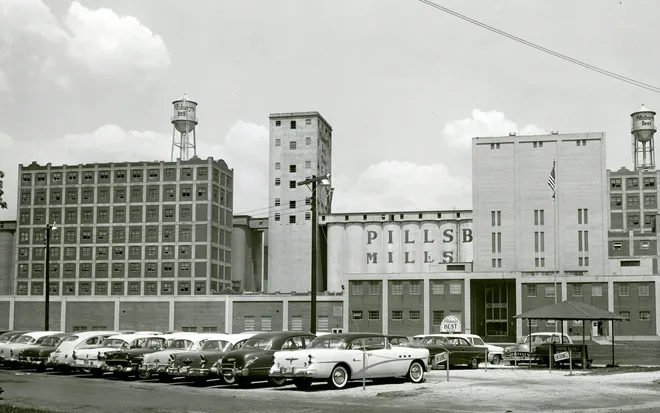
For nearly a century, the Pillsbury plant stood as one of Springfield, Illinois’ most recognizable industrial landmarks. Constructed between 1920 and 1929 along the northeast edge of downtown, it grew into one of the largest flour milling operations in North America. At its height after World War II, it employed close to 1,500 people. The plant produced flour, yellow and white cornmeal, and grits that moved by rail across the country. Families on Springfield’s northeast side built their livelihoods around its operations. Many workers represented second and third generation employment at the same facility.
CLOSURE, ABANDONMENT, AND ENVIRONMENTAL CONCERNS
Ownership changed in 1991 when Cargill acquired the property. Operations ceased in 2001. After closure, the site sat idle. In 2008, it was sold for scrap. Years of abandonment led to vandalism, structural decline, and serious environmental concerns. Illegal asbestos removal activities left hazardous materials exposed. The once thriving industrial campus became an 18-acre brownfield site in the center of Springfield.
REDEVELOPMENT AND COMMUNITY EFFORTS
Today, the nonprofit Moving Pillsbury Forward leads the effort to remediate and reposition the property. Their work includes environmental cleanup, demolition planning, preservation of key historical elements, and public engagement through tours and art installations. You can learn more about the site's history on the Pillsbury Project website.
National coverage detailing the cleanup and redevelopment efforts is available through this Associated Press Article.
BLAST IT CLEAN JOINS THE PROJECT
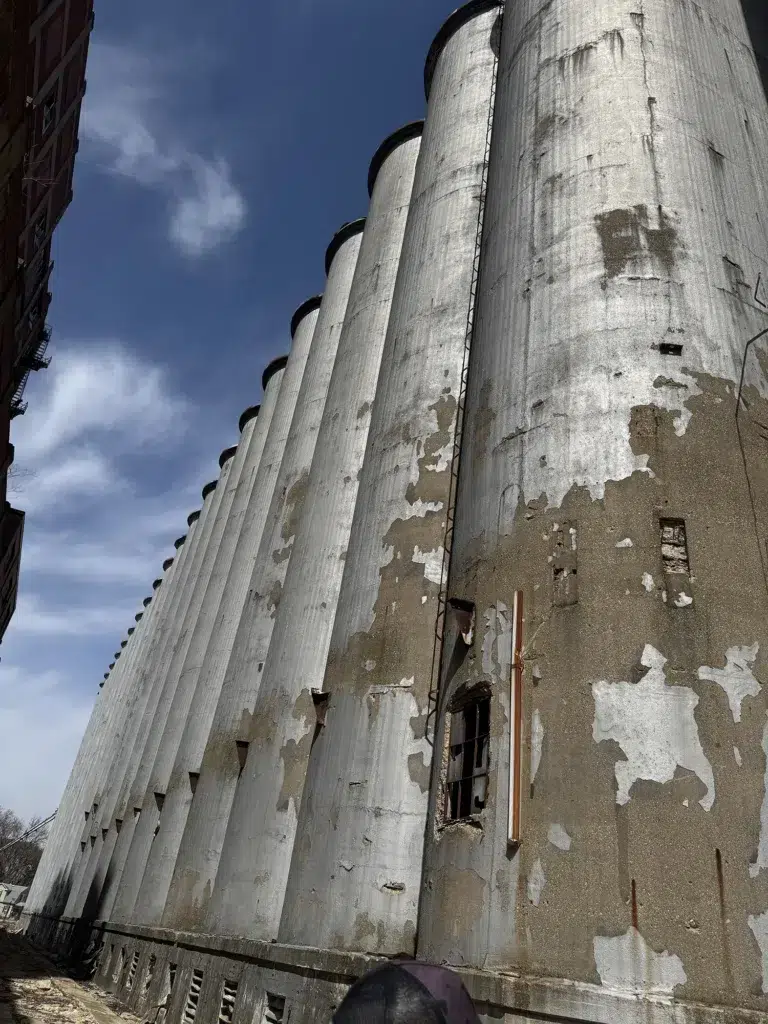
Blast It Clean became involved during a critical stage of this transformation. Multiple acres of downtown land were ready for redevelopment, yet a hazardous and abandoned structure remained in place. The exterior concrete silos, house tower, and pass-through were coated in asbestos-containing material. Before demolition and broader site work could move forward, the asbestos coating had to be removed safely and thoroughly.
The client first explored traditional removal approaches. Machine blasting and power washing were presented as primary options. Both methods carried higher projected costs and introduced greater risk of airborne contamination. At that point, the client brought Blast It Clean into the conversation. They were searching for a more cost-effective approach that would maintain strict environmental safeguards.
The initial issue was clear. A hazardous building sat on land targeted for revival in downtown Springfield. Asbestos-coated multiple vertical concrete elevations. The site needed remediation that protected workers, nearby properties, and the surrounding community. The expectation was straightforward. Remove all asbestos from the concrete surfaces.
OUR APPROACH WITH VAPOR BLASTING
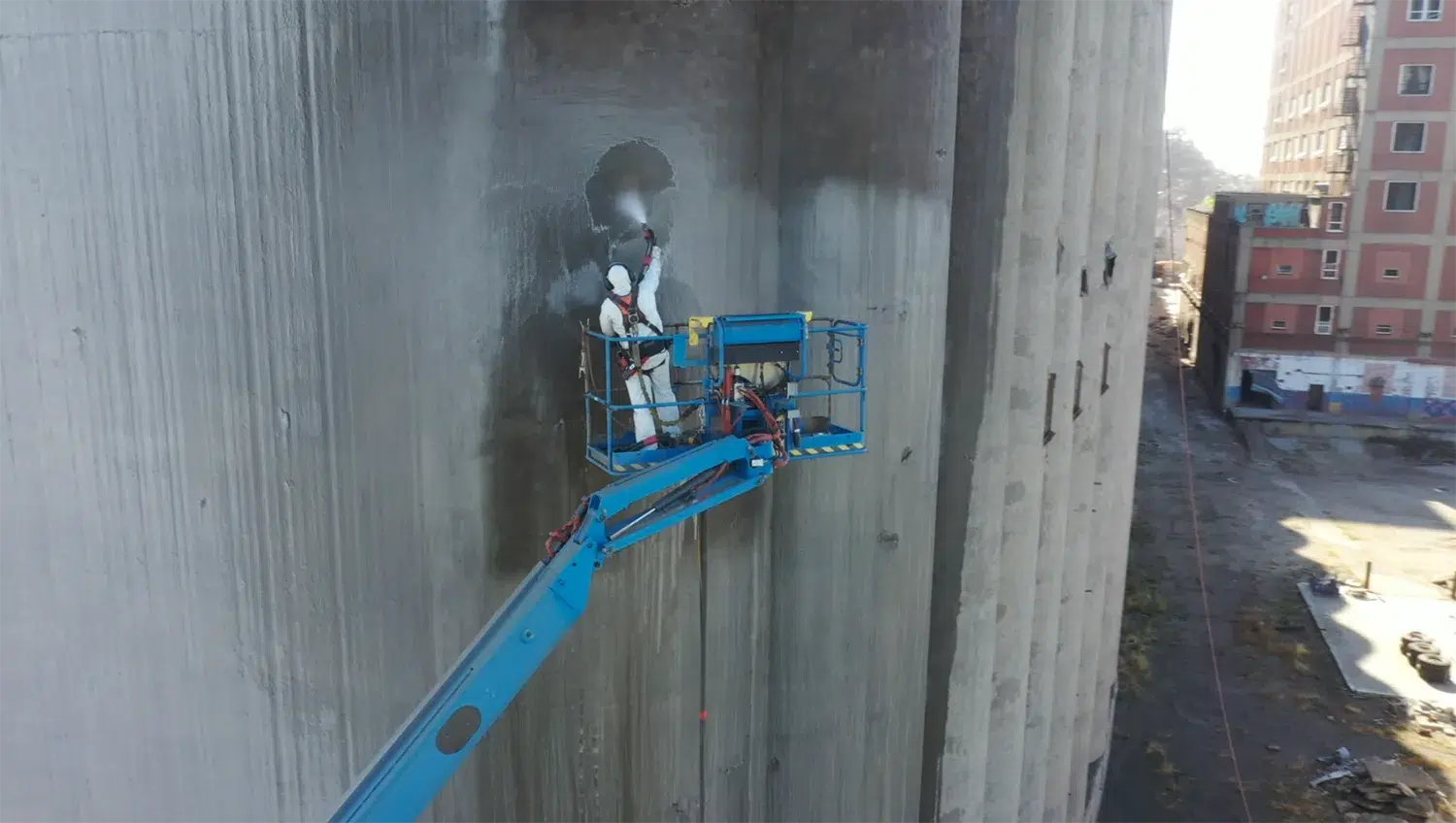
Blast It Clean met those expectations through vapor blasting with water induction, also known as dustless blasting. This process introduced water directly into the blasting stream at the nozzle. By combining water and media at the point of impact, the system reduced airborne particulate. Instead of dry dust spreading across the site, the material remained heavier and easier to contain. This approach supported both effective coating removal and environmental protection.
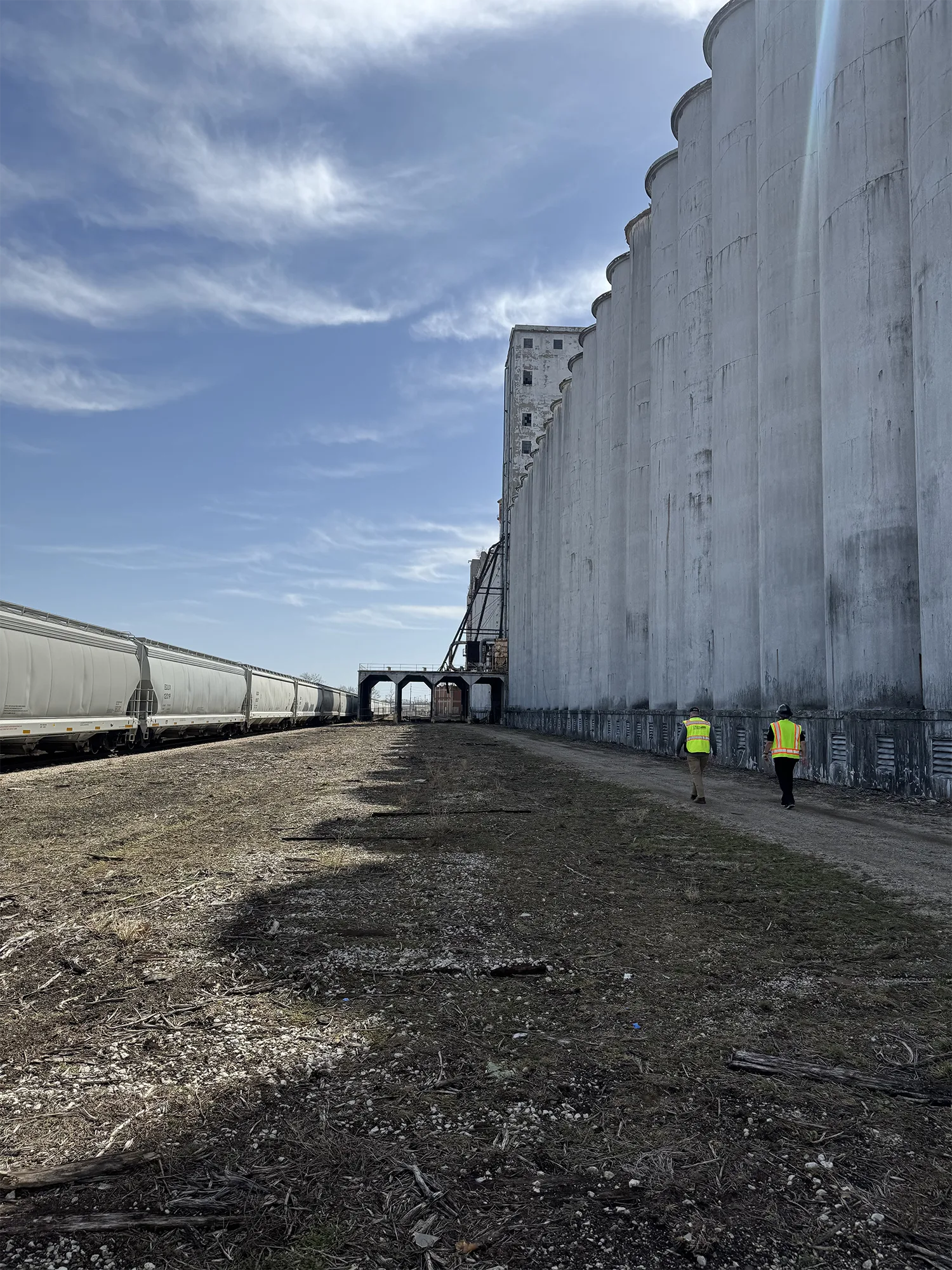
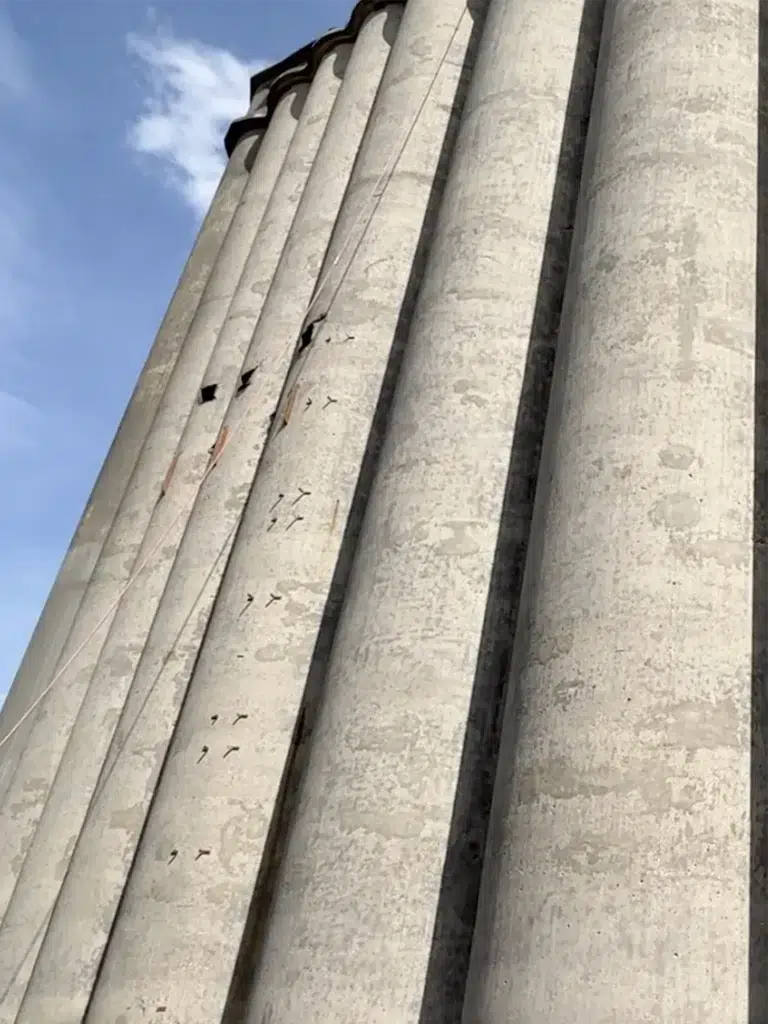
Surface preparation focused on the complete removal of the asbestos coating from the silos, house tower, and pass-through. Crews worked methodically across each elevation to leave a clean concrete substrate. The objective was not partial abatement. The objective was to completely remove the hazardous coating to allow the redevelopment process to advance without lingering contamination concerns.
CHALLENGES DURING THIS LARGE SCALE PROJECT
Execution required careful planning and coordination. Many of the surfaces rose as high as 110 feet above grade. Crews relied on boom lifts and telescopic lifts to access upper elevations. Scissor lifts supported work at lower levels. Sustaining 120 PSI at heights approaching 110 feet required disciplined equipment management. Hoses, compressors, and water lines had to perform consistently under demanding conditions.
Water supply represented another operational challenge. Vapor blasting depends on steady water induction. Crews coordinated water access to maintain continuous production while preventing overspray and runoff issues. Containment practices were central to the process. Working around asbestos demanded strict attention to dust suppression. The goal was simple. Keep hazardous material out of the air and within controlled collection areas.
Accessibility added complexity. Swing lifts provided reach along the vertical faces of the silos and tower. Crews maneuvered around uneven terrain, mud, and off-grade conditions. The weather influenced daily production. Wind required monitoring to maintain containment standards. Rain and changing temperatures affected ground conditions and lift placement. Each shift began with safety discussions focused on these variables.
Coordination with other trades also presented obstacles. Equipment staging, shared access routes, and sequencing required consistent communication. The site included multiple active work zones. Blast It Clean integrated its schedule with the broader remediation timeline to avoid delays.
PROJECT COMPLETION AND FINAL SIGN OFF
Despite these hangups, the project moved forward efficiently. Vapor blasting delivered measurable advantages over the originally proposed machine blasting and power washing methods. The water induction process reduced visible dust and improved containment performance. Crews maintained steady production rates across large vertical surfaces without compromising safety standards.
One of the most important outcomes came at project completion. The asbestos coating was removed from the targeted concrete surfaces. The site received final sign-off. No workers or nearby individuals were affected by hazardous exposure during the removal process. The clean concrete substrate allowed the next phase of demolition and redevelopment to proceed.
SUPPORTING SPRINGFIELD’S NEXT CHAPTER
This work supported more than surface preparation. It removed a key environmental barrier to revitalizing one of Springfield’s most historically significant industrial properties. The Pillsbury plant shaped the city’s workforce and economy for decades. Its decline left visible scars across downtown. Environmental remediation represents the first step toward restoring value to that land.
Blast It Clean’s role in this project reflects experience with complex industrial abatement and high access surface preparation. The combination of vapor blasting, disciplined containment, and coordinated site management delivered a cost effective path forward. By addressing asbestos removal safely and efficiently, the project cleared the way for continued cleanup, demolition, and future redevelopment.
As Moving Pillsbury Forward continues its work, the story of the site evolves from abandonment to renewal. Environmental remediation lays the groundwork for new opportunity. Blast It Clean is proud to have contributed to that transition, helping transform a hazardous structure into a safer foundation for Springfield’s next chapter.