
PRESERVING HERITAGE: PARTNER WITH BLAST IT CLEAN FOR HISTORIC RESTORATION
Historic buildings are part of your community’s identity. Each one carries the design choices, materials, and workmanship of a specific time. To restore them, you need methods that respect both structure and story. Blast It Clean provides restoration services that balance cleaning, preservation, and long-term protection.
We use controlled blasting methods to remove dirt, coatings, and corrosion without harming delicate surfaces. We prepare buildings for continued use and ensure their value is protected for future generations.
WHY ACCURACY MATTERS IN HISTORIC RESTORATION
Every historic building has unique challenges.
✔ Stone can be soft or porous.
✔ Wood may have aged unevenly.
✔ Metal surfaces often have layers of corrosion or protective coatings.
Using the wrong abrasive or pressure level risks permanent damage. Accuracy is not optional. It is the difference between restoring detail or erasing history.
Our team studies each surface and selects the right blasting media for the job. With over 47 media types available, we can adapt to the needs of each material and condition.
GET IN TOUCH WITH US
MEDIA OPTIONS FOR HISTORIC RESTORATION
Choosing the correct blasting media is critical. Below are common options used in restoration and when to apply them.
BAKING SODA
- Gentle on stone, wood, and certain metals
- Removes dirt, soot, and light coatings without etching
- Non-toxic and water-soluble, making cleanup efficient
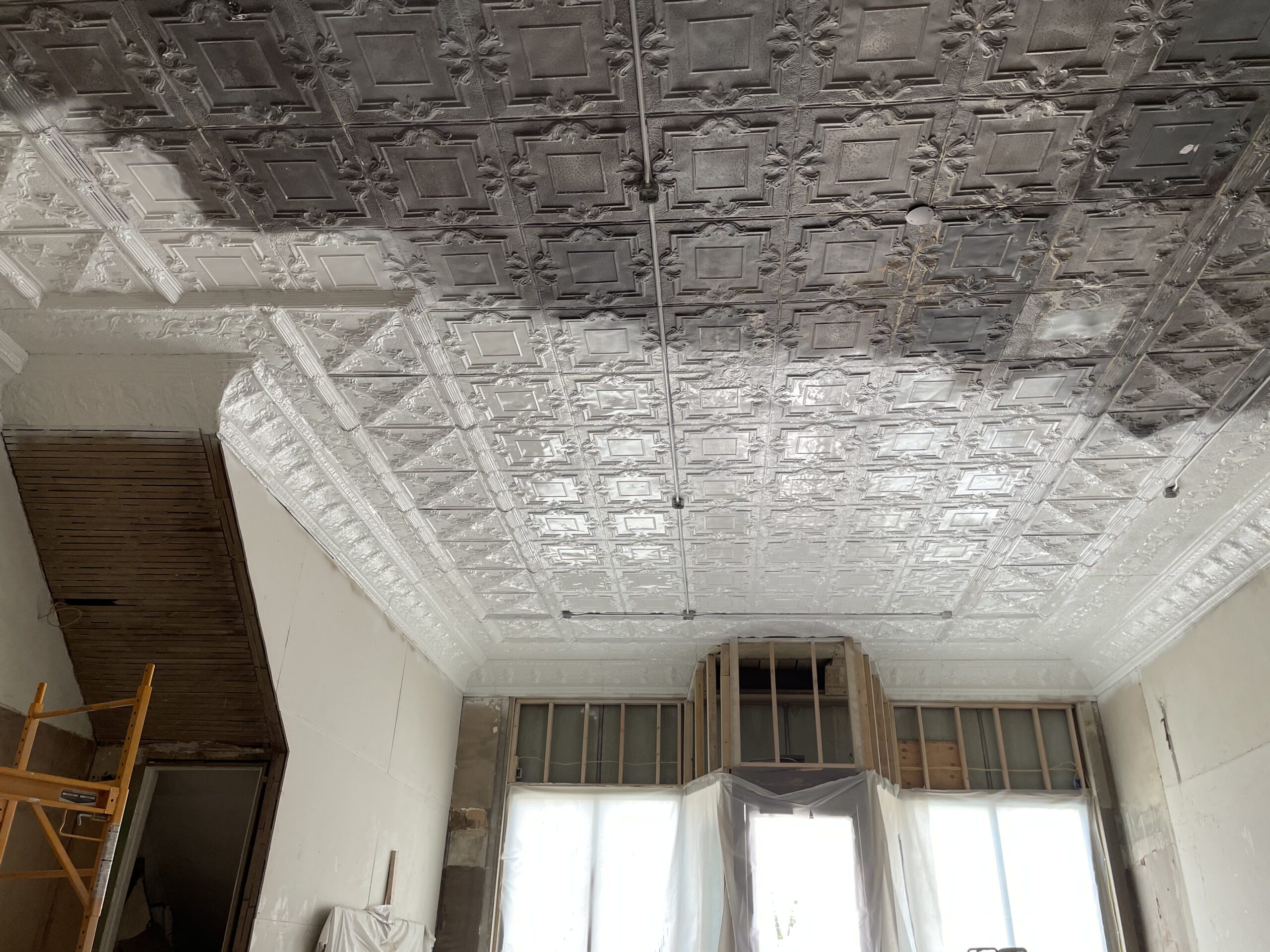
- Often used on fire-damaged surfaces where smoke residue must be removed
WALNUT SHELL
- Biodegradable and natural
- Effective for removing paint or coatings from fragile surfaces
- Works well on ornate stone or metal where detail must remain intact
CORN COB GRIT
- Mild abrasive, ideal for polishing delicate materials
- Useful on soft wood and surfaces that cannot handle harder abrasives
- Creates a clean finish without over-stripping
CRUSHED GLASS
- Stronger than baking soda but safer than sand
- Removes rust, paint, and tough coatings
- Less likely to embed in the surface compared to traditional sand
- Often chosen for brick or steel restoration
SPONGE MEDIA
- Low dust, clean, and controlled
- Minimizes surface damage due to cushioning effect of sponge particles
- Useful for statues, sculptures, and fine architectural detail
- Environmentally safer and easy to control indoors
WET ABRASIVE BLASTING
- Uses water mixed with abrasives
- Reduces airborne dust, important for sensitive areas
- Allows close control over impact force
- Commonly applied to masonry and softer stone
Each method is applied with strict control. We test surfaces before full application. Adjustments are made to protect every architectural detail.
BENEFITS OF SANDBLASTING FOR HISTORIC RESTORATION
Blasting, when paired with the right abrasive, provides measurable advantages:
1. GENTLE CLEANING
Soft abrasives lift dirt and coatings without cutting into the base surface. Baking soda blasting is one example, as it removes surface contaminants while leaving stone, wood, or brick intact.
2. LAYER CONTROL
Blasting allows controlled removal. Instead of stripping everything, only unwanted layers are removed. For example, deteriorated paint can be taken off while the original finish or stone remains unharmed.
3. TIME EFFICIENCY
Manual cleaning of historic surfaces can take weeks. Blasting can cover large areas in days. This reduces project time without sacrificing detail.
4. RESTORATION OF ORIGINAL APPEARANCE
When dirt and coatings are removed, the original design is revealed. Brickwork shows its natural color again. Metalwork regains its form without corrosion.
5. PREPARATION FOR COATINGS OR REPAIRS
Clean surfaces ensure new coatings or sealants adhere correctly. This step is critical for longevity. A restored building without proper preparation will deteriorate again faster.
RISKS AND HOW WE MANAGE THEM
Blasting historic surfaces carries risks. Improper methods can scar stone, wear down wood, or chip masonry. To prevent this, we:
- Conduct surface testing before full application
- Select media based on material, age, and condition
- Adjust pressure settings with care
- Use containment systems to control dust and debris
Our technicians are trained to balance cleaning and preservation. Each step is documented for accountability.
PROJECT EXAMPLES AND APPLICATIONS
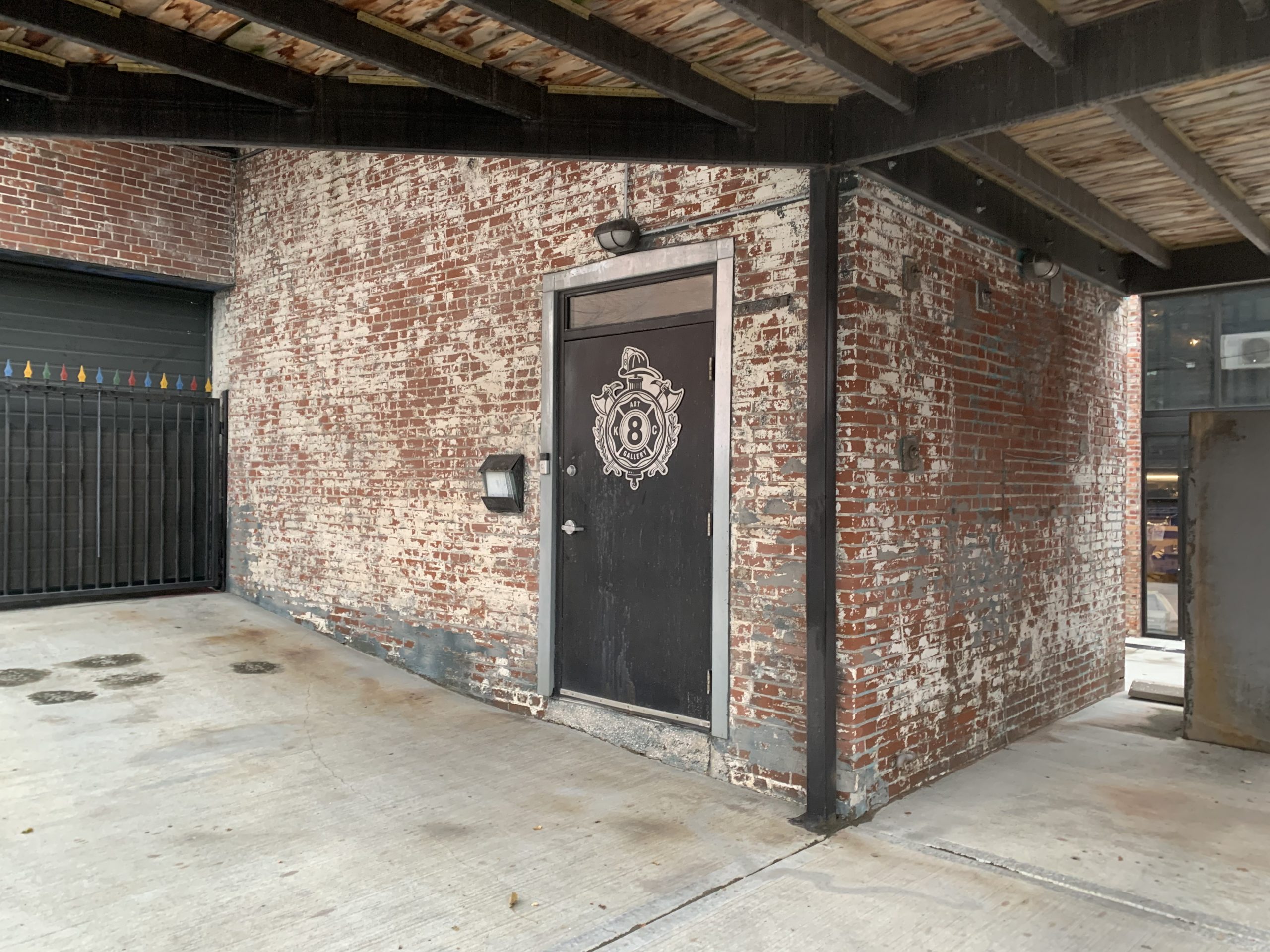
HISTORIC BRICK FIRE STATIONS
- Red brick often darkens with soot, pollution, and paint layers
- Crushed glass or sponge media removes coatings without etching the brick
- Water blasting is applied to control dust in city environments
MONUMENTS AND MEMORIALS
- Stone monuments often collect grime and biological growth
- Baking soda and corn cob grit remove deposits gently
- Protective sealants can be applied afterward to extend durability
CHURCHES AND RELIGIOUS STRUCTURES
- Wood beams, stained glass surrounds, and stone carvings require mixed methods
- Sponge blasting protects carved detail
- Walnut shells remove coatings from wood without tearing fibers
INDUSTRIAL HERITAGE BUILDINGS
- Factories or warehouses often have steel, brick, and concrete combined
- Multiple media types are used in one project
- Protective coatings are applied to prevent further corrosion after cleaning
WHY CHOOSE BLAST IT CLEAN
1. EXPERIENCE
We have decades of hands-on work in industrial blasting and coatings. Historic restoration builds on this background.
2. MEDIA OPTIONS
We offer 47 blasting media choices. This range allows us to match the right abrasive to each material.
3. AVAILABILITY
- 24/7 scheduling
- 24-hour emergency response
- Rapid deployment for urgent restoration needs
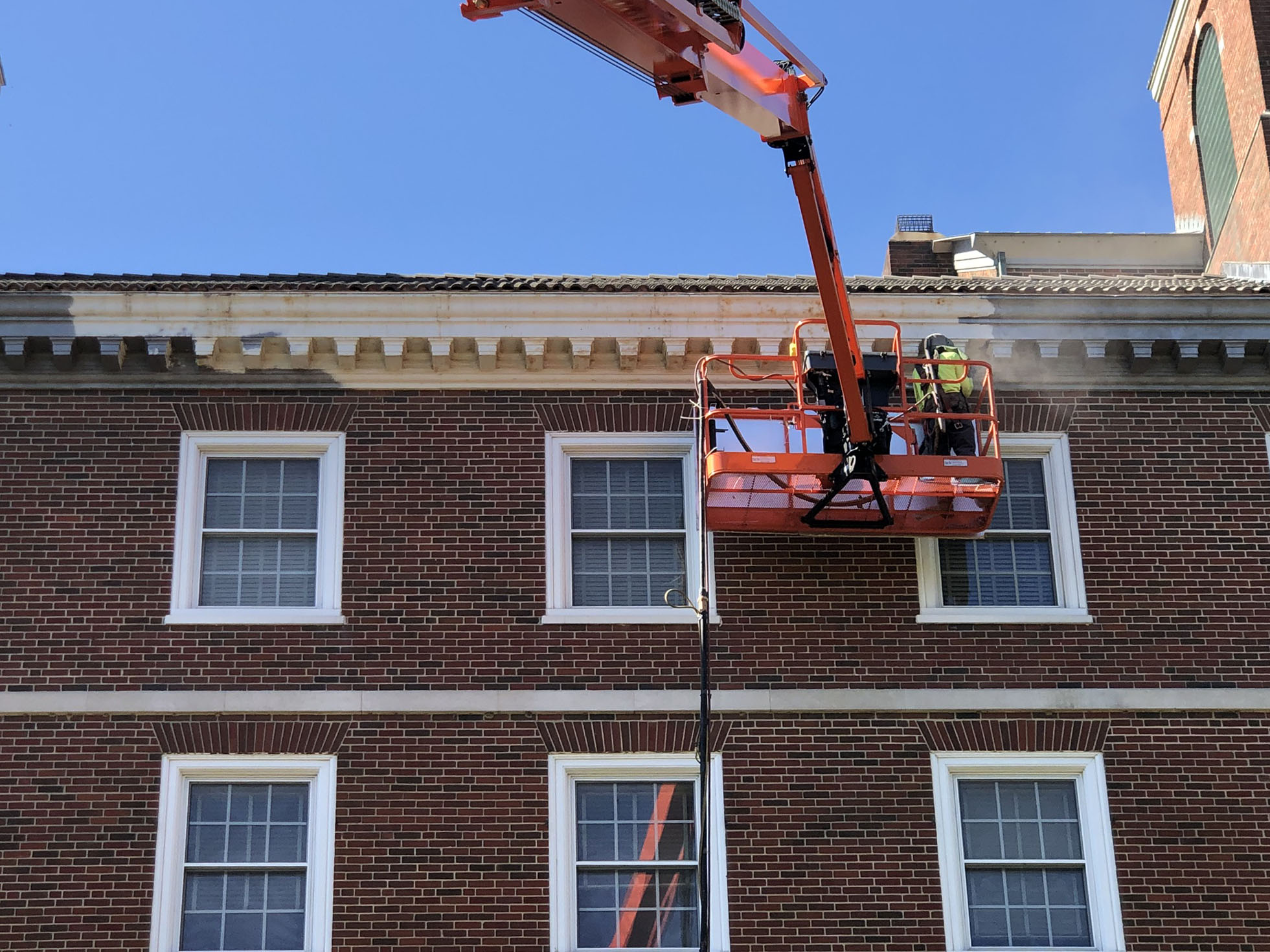
4. SAFETY AND PRESERVATION
We maintain strict controls to protect structural and historical value. Our methods balance cleaning and conservation.
5. LONG-TERM PROTECTION
Beyond cleaning, we provide coatings that protect surfaces against weather, moisture, and environmental wear. This extends the life of the restoration work.
FREQUENT QUESTIONS
WHAT MAKES BLASTING BETTER THAN MANUAL CLEANING?
Blasting covers large areas quickly. It removes unwanted material more evenly than manual methods. It also prepares surfaces for future protection.
IS SAND TOO HARSH FOR HISTORIC RESTORATION?
Blasting covers large areas quickly. It removes unwanted material more evenly than manual methods. It also prepares surfaces for future protection.
HOW DO YOU CONTROL DUST DURING THE PROCESS?
We use containment, vacuum recovery systems, and wet blasting methods. These control airborne particles and protect both workers and the surrounding environment.
WHAT IF A BUILDING HAS MULTIPLE MATERIALS?
We adapt our approach section by section. For example, a single building may require crushed glass for brick, walnut shells for wood trim, and sponge blasting for decorative metal.
THE VALUE OF HISTORIC RESTORATION
Restoration is not only about appearance. It is also about structural integrity and community identity.
- Buildings with clean and well-maintained surfaces last longer.
- Historic districts attract tourism and investment.
- Preserved landmarks strengthen local culture.
- Restoration reduces the cost of future repairs.
Investing in proper methods avoids the higher costs of repairing damaged surfaces later.
HOW BLAST IT CLEAN WORKS WITH YOU
Our process is designed for control and accountability:
1. SITE ASSESSMENT
We evaluate materials, coatings, and damage. We document surface conditions before work begins.
2. MEDIA TESTING
We apply small test areas with different media. This confirms the safest and most effective method.
3. PROJECT PLANNING
We develop a schedule, assign team members, and set containment plans.
4. EXECUTION
Our team performs blasting under controlled conditions. Safety and preservation are the top priorities.
5. PROTECTION
We apply coatings where required. This ensures durability and longevity.
6. FINAL REVIEW
We inspect the finished work with the client. The goal is a restored structure that retains its historic integrity.
CONTACT BLAST IT CLEAN TODAY
Historic structures require care and accuracy. Our team is ready to support your project with proven methods and professional skill. Contact us today to schedule a consultation. Protect your history with Blast It Clean.