
Corrosion Control Along Chicago Waterways
WHAT PROPERTY AND FACILITY OWNERS SHOULD KNOW
If your facility sits anywhere near the Chicago River, Lake Michigan, or one of the city's industrial canals, corrosion is probably already on your radar. Maybe it's a dock that's showing rust bleed along the seams. Maybe it's a steel support beam under a bridge that looks a little rougher than it did last year.
Chicago's waterways are a huge part of what makes this city work, moving barges, supporting shipping terminals, and anchoring a whole network of industrial waterfront property. But that same water that keeps things moving is also quietly working against the metal structures built around it.
At Blast It Clean, we spend a lot of time around Chicago's industrial waterfront, prepping steel, concrete, and equipment for coatings that need to hold up in some genuinely tough conditions. We've learned that corrosion near the water isn't really one problem. It's a handful of overlapping environmental factors that combine to speed up metal degradation faster than most people expect.
This post walks through why that happens and what it means for surface preparation and long-term corrosion control in this part of the country.
WHY WATERWAY PROXIMITY CHANGES THE CORROSION EQUATION
Corrosion happens everywhere steel is exposed to oxygen and moisture. That part isn't unique to Chicago. What is unique is how many corrosion-accelerating conditions stack up in one place along our rivers and lakefront.
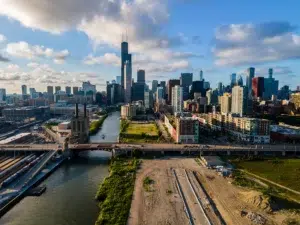 Humidity near open water tends to stay elevated for longer stretches of the day, even when the forecast looks dry. That constant moisture film on exposed steel gives oxidation a head start it wouldn't get in a drier inland setting. Add in temperature swings, splash zones, and the fine mist kicked up by barge and boat traffic, and you've got metal surfaces that rarely get a real chance to dry out completely.
Then there's Chicago's winter road salt. It doesn't stay on the roads. Runoff carries chloride into storm drains, low-lying industrial yards, and directly into waterways, where it settles onto nearby steel structures, piers, and equipment. Chlorides are particularly aggressive because they don't just sit on the surface, they actively break down protective oxide layers and accelerate pitting corrosion, which is harder to spot early and harder to repair once it takes hold.
Industrial waterfront corrosion also gets a push from air quality near active shipping and manufacturing zones. Airborne particulates and pollutants common in these industrial corridors can settle on metal surfaces and interact with moisture in ways that speed up the corrosion timeline. None of this is dramatic on its own. It's cumulative, which is exactly why it tends to sneak up on facility owners.
MARINE CORROSION ISN’T LIMITED TO MARINE EQUIPMENT
You may hear "Chicago marine corrosion" and picture boat hulls and dock hardware. Those are absolutely part of the picture, but the exposure pattern extends well beyond anything actually sitting in the water.
Steel corrosion Lake Michigan and river-adjacent facilities deal with includes:
- Loading docks, cranes, and conveyor systems positioned along the waterfront
- Structural steel supports, walkways, and stairways near open water
- Storage tanks and pipe racks exposed to lake-effect humidity
- Fencing, railings, and secondary structures that get overlooked because they're not "critical" equipment
- Vehicle and equipment fleets that regularly operate near the water or on salted roads nearby
That last category surprises people. Fleet vehicles and mobile equipment that spend time near Chicago's waterways pick up the same chloride and moisture exposure as fixed structures. Over time, that shows up as corrosion in wheel wells, undercarriages, and frame components, not just on stationary steel.
The common thread across all of it is location. Distance from the water, prevailing wind direction, and how sheltered or exposed a structure is all shape how fast corrosion develops.
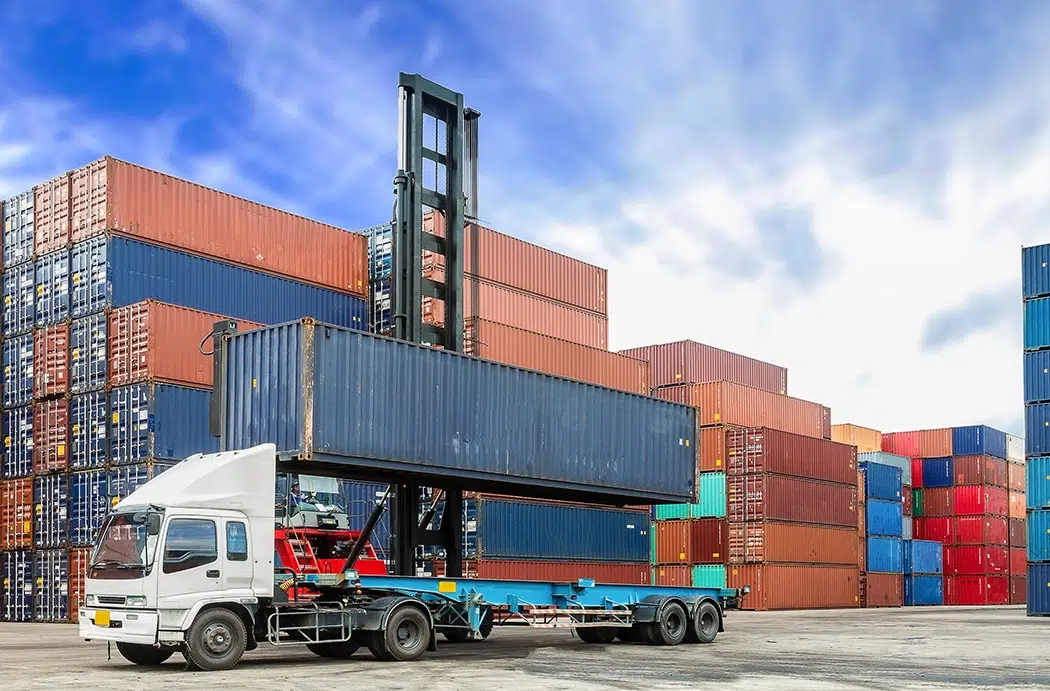
Two buildings a quarter mile apart can age at noticeably different rates depending on how much splash, humidity, or salt spray they actually see.
SURFACE PREP IS WHERE CORROSION CONTROL ACTUALLY STARTS
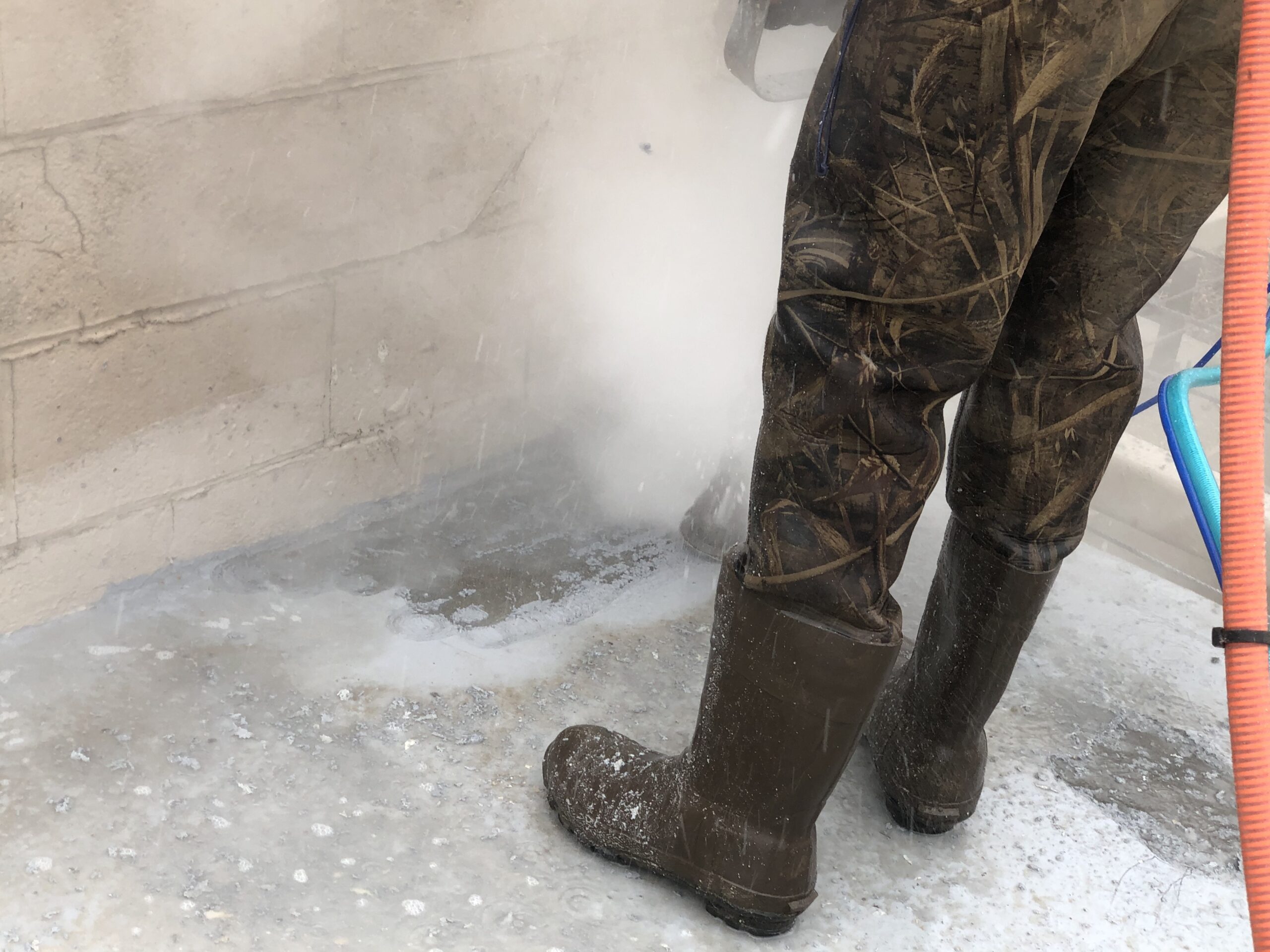
Coatings get most of the attention when people talk about corrosion mitigation, and for good reason, a well-applied protective coating is a genuinely effective barrier. But that coating is only as good as the surface underneath it. Surface prep near waterways in Chicago carries extra weight because the substrate has usually already been fighting moisture, salt, and airborne contaminants long before a coating crew ever shows up.
Sandblasting removes existing rust, old failing coatings, and surface contamination down to a clean profile that gives new coatings something solid to bond to. Skip that step, or rush it, and you're essentially sealing corrosion in rather than stopping it. This is especially true near water, where residual chlorides can hide in pitted or porous steel and keep corroding from underneath a fresh coat of paint. A proper abrasive blast profile pulls that contamination out and gives the coating a real shot at doing its job for the long haul.
This is part of why we built Blast It Clean as a one-stop shop. Surface prep and coating application aren't really separate projects when you're dealing with waterfront steel, they're two halves of the same corrosion control strategy. Handling both under one roof means the surface prep is done with the specific coating system in mind, not as a generic first step handed off to someone else.
WHAT LOCATION-DRIVEN CORROSION CONTROL LOOKS LIKE IN PRACTICE
For facility and property owners along Chicago's industrial waterfront, staying ahead of corrosion isn't about reacting to visible rust. By the time rust is visible, pitting has usually already started underneath. A steadier approach looks more like this:
KNOW YOUR EXPOSURE ZONES
Structures closest to open water, in prevailing wind paths, or downstream of road salt runoff need more frequent inspection than sheltered assets further inland.
INSPECT BEFORE THE DAMAGE IS OBVIOUS
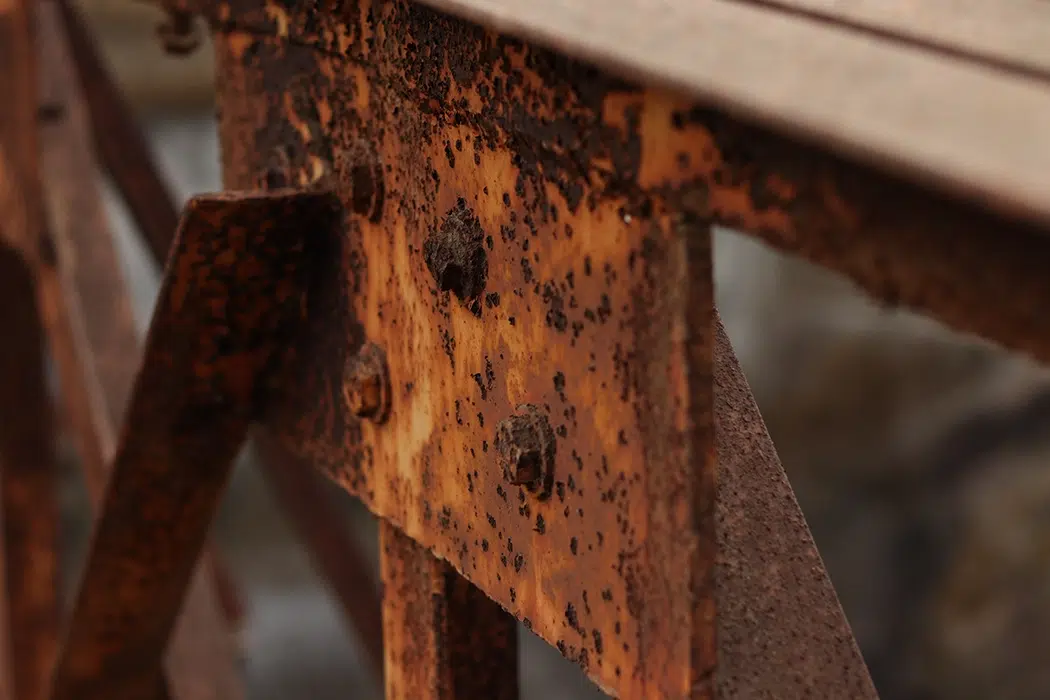
Discoloration, chalking coatings, or a slightly rough texture on steel are early signs worth catching before they turn into pitting or structural concern.
TREAT SURFACE PREP AS NON-NEGOTIABLE
Any repaint or recoat project near water should include proper abrasive blasting, not a quick scuff-and-paint approach. It costs more upfront and saves significantly more down the line.
MATCH THE COATING SYSTEM TO THE ENVIRONMENT
Waterfront steel needs coatings rated for the moisture and chloride exposure it actually faces, not a generic industrial paint pulled off the shelf.
PLAN MAINTENANCE CYCLES AROUND LOCATION, NOT A FIXED CALENDAR
A dock structure with heavy splash exposure needs a different inspection and recoat timeline than an inland warehouse a mile from the river.
A STEADY, LOCAL APPROACH TO CORROSION MITIGATION
Corrosion along Chicago's waterways isn't caused by one bad season or one harsh winter. It's the result of constant exposure to moisture, chlorides, industrial pollution, and changing weather.
The facilities that stay ahead of corrosion are usually the ones that understand how those conditions affect their property and plan maintenance before problems become expensive.
That's the approach we take at Blast It Clean. Surface preparation, industrial cleaning, and protective coatings all work together to help steel last longer in one of the Midwest's toughest environments.
If you manage a facility near Chicago's waterways, we'd be happy to walk your site, evaluate your exposure, and talk through a surface preparation and coating plan that fits your facility.