Does Blast It Clean’s Dry Ice Blasting Service Meet Food-Grade Cleaning Standards?
Yes, dry ice blasting is well-suited for cleaning in food and beverage manufacturing environments when the process uses food-grade dry ice and complies with the facility’s sanitation, food safety, and operating requirements.
There is an important distinction, though. The FDA does not issue a blanket approval for a cleaning contractor or declare an entire dry ice blasting service “food-grade.” Food manufacturers remain responsible for meeting the sanitation requirements applicable to their facilities. Blast It Clean serves as an industrial cleaning partner that meets those requirements, helping manufacturers remove buildup and contaminants from equipment and facility surfaces while reducing many of the complications associated with water, chemicals, and secondary blast media.
For food manufacturers, this makes dry ice blasting especially useful around production equipment, conveyors, structural steel, walls, overhead areas, processing equipment, and other surfaces where traditional industrial cleaning presents challenges.
WHAT DOES “FOOD-GRADE CLEANING” ACTUALLY MEAN?
The phrase “food-grade cleaning” is used frequently, but it does not refer to a single universal cleaning certification.
Food manufacturers operate under sanitation requirements designed to protect food from contamination and allergen cross-contact. FDA regulations require food-contact surfaces, utensils, and equipment to remain clean and sanitary where appropriate. Facilities also develop their own sanitation procedures, preventive controls, Standard Sanitation Operating Procedures, or similar programs based on the products and hazards present within the plant.
FDA guidance identifies cleanliness of food-contact surfaces, utensils, and equipment as part of sanitation preventive controls.
This means the better question is not simply, “Is dry ice blasting food-grade?”
The better question is, “Does dry ice blasting fit into our facility’s sanitation program and help us reach the required cleanliness level for this surface?”
In many industrial food manufacturing settings, the answer is yes.
Blast It Clean works with manufacturers to understand the surface, contaminant, production environment, access requirements, containment needs, and cleaning goals before work begins.
WHY IS DRY ICE BLASTING USED IN FOOD MANUFACTURING?
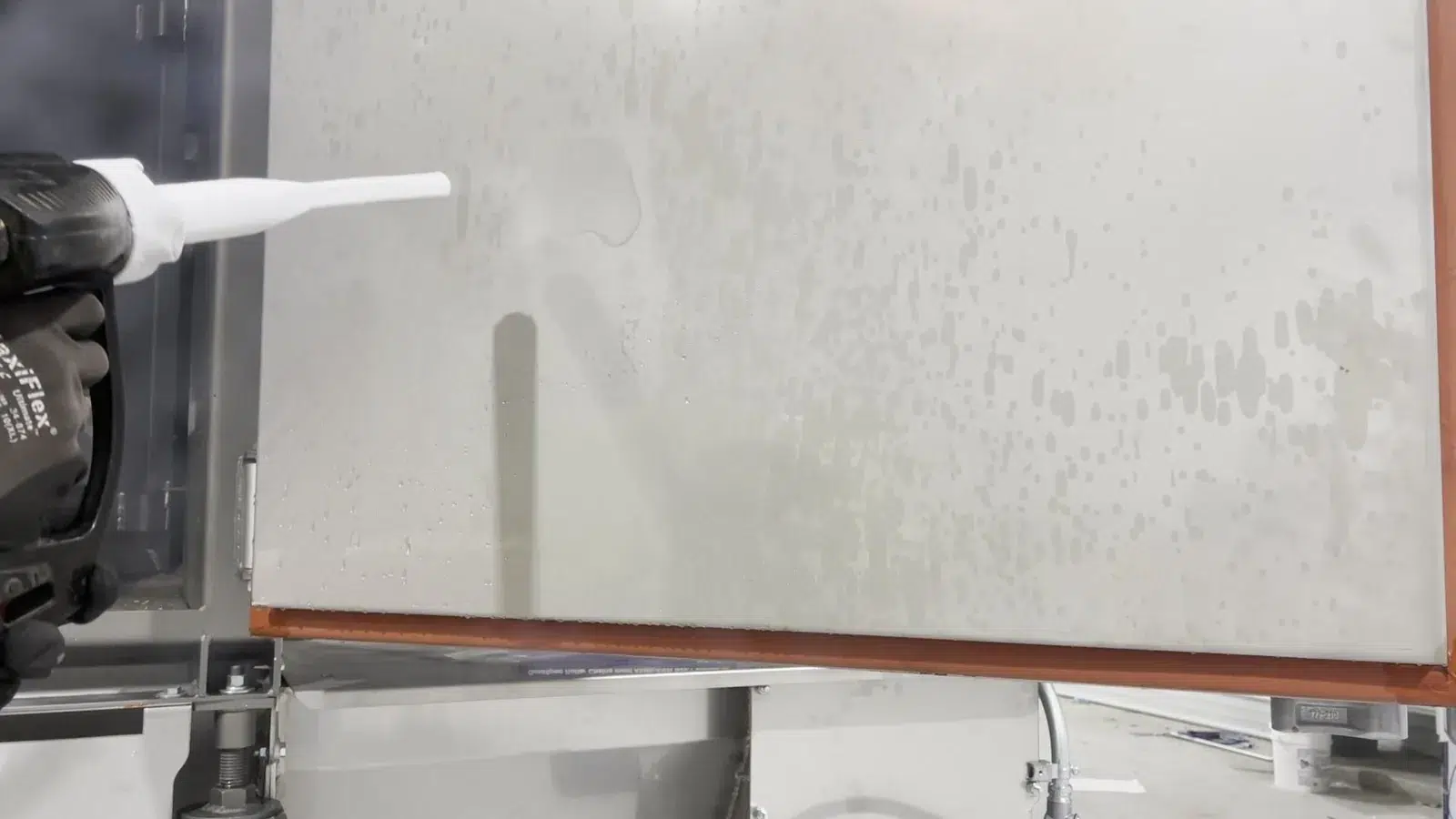
Dry ice blasting uses solid carbon dioxide pellets accelerated through compressed air. The pellets strike the surface and help release unwanted material. The dry ice then sublimates, meaning it changes from a solid to a gas rather than remaining behind as spent abrasive material.
The contaminant removed from the surface still needs to be collected and managed, but the blasting media itself does not create a pile of sand, glass, or other abrasive material.
That distinction matters inside a food manufacturing plant.
Traditional pressure washing introduces water. Abrasive blasting introduces blast media. Chemical cleaning introduces cleaning compounds and often requires rinsing. Each approach has appropriate uses, but each also introduces something else into the work area.
Dry ice blasting gives manufacturers another option.
For facilities where moisture, secondary media, or chemical residue would create additional cleanup concerns, dry ice blasting offers a dry cleaning process with little secondary waste from the blasting media itself.
DOES DRY ICE BLASTING LEAVE RESIDUE?
The dry ice itself does not remain on the cleaned surface because it sublimates into carbon dioxide gas.
This is one of the biggest reasons manufacturers look at dry ice blasting for sensitive industrial environments.
It is important to separate “no blast media residue” from “no cleanup.”
If dry ice blasting removes grease, baked-on material, coatings, food residue, dust, or other contamination, the removed material still exists. A cleaning plan needs to account for capturing, vacuuming, wiping, or otherwise removing this debris from the work area.
Blast It Clean plans around this part of the process rather than treating blasting as an isolated step.
The goal is a managed industrial cleaning project, not simply firing dry ice at a dirty surface.
IS DRY ICE ITSELF SAFE FOR FOOD ENVIRONMENTS?
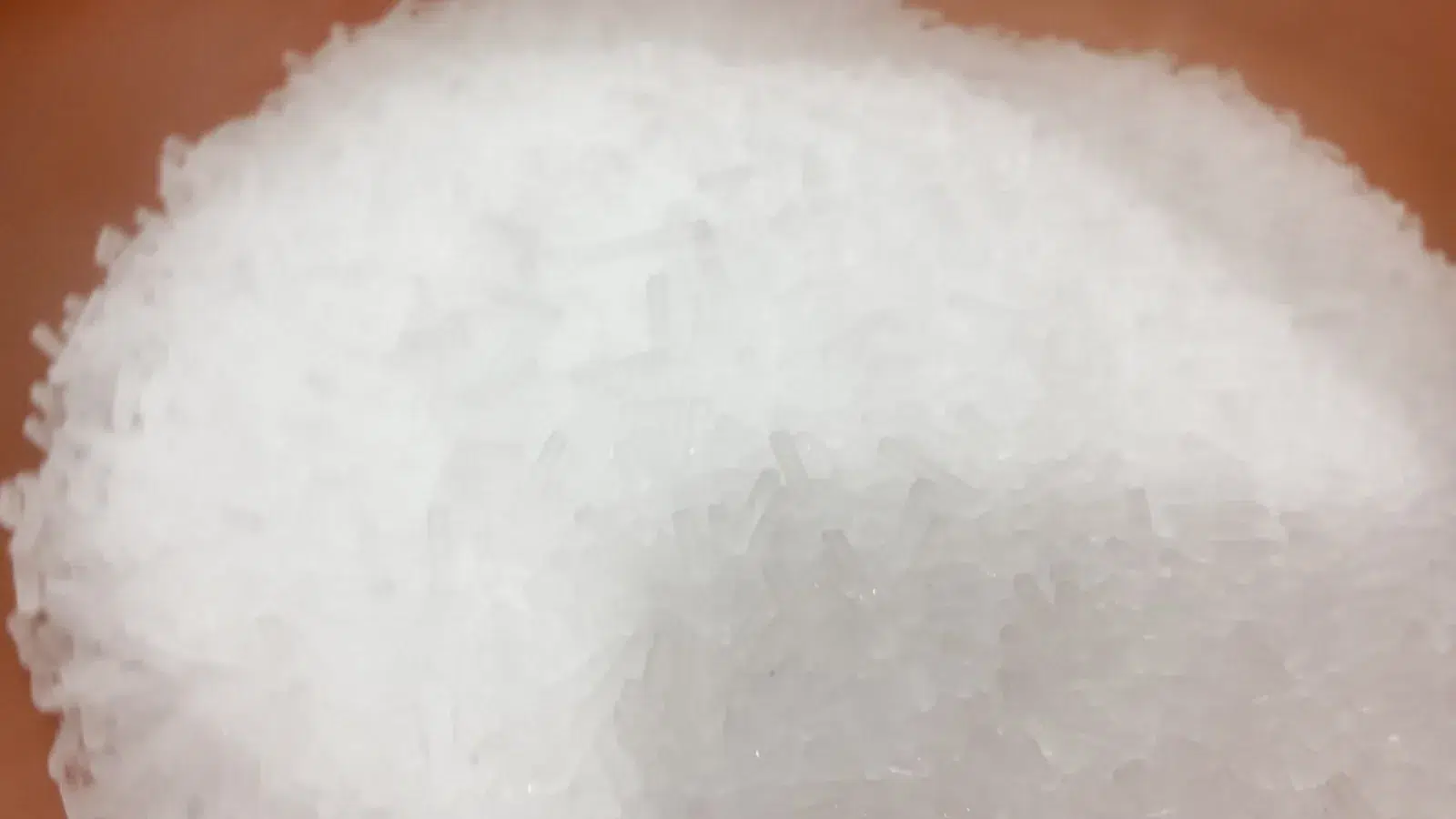
The grade and source of dry ice matter when planning work inside a food manufacturing environment.
Food-grade carbon dioxide has established uses within food processing. FDA inspection guidance also states that substances used in foods must meet food-grade quality requirements and points to Food Chemicals Codex specifications when determining food-grade quality.
For a dry ice blasting project in a food manufacturing environment, the grade and source of the dry ice matter.
Blast It Clean works with the requirements of the individual facility and project rather than assuming every food plant follows an identical cleaning program.
This matters because a bakery, pet food plant, meat processor, beverage facility, ingredient manufacturer, and ready-to-eat food facility might have different hazards, equipment, sanitation procedures, production schedules, and verification requirements.
“Food manufacturing” is a broad category. Your cleaning plan needs to reflect what happens inside your plant.
DOES DRY ICE BLASTING SANITIZE FOOD-CONTACT SURFACES?
This is where terminology matters.
Cleaning and sanitizing are related, but they are not interchangeable.
Dry ice blasting is primarily an industrial cleaning process used to remove unwanted material from a surface. A manufacturer should not assume dry ice blasting automatically replaces every sanitation or disinfection step required by its food safety program.
FDA requirements address both cleanliness and protection against contamination and allergen cross-contact. The required process depends on the surface, the food product, the identified hazards, and the sanitation program within the facility.
For some projects, dry ice blasting serves as the cleaning step before another facility-approved sanitation process. For others, it addresses non-food-contact equipment, structural surfaces, overhead areas, production support equipment, or areas where removing buildup is the primary objective.
Blast It Clean coordinates the scope with the manufacturer so our work fits into the plant’s established food safety process.
That distinction helps purchasing teams, plant managers, sanitation managers, quality teams, and maintenance departments evaluate dry ice blasting based on the actual job rather than broad claims about the technology.
WHAT TYPES OF FOOD MANUFACTURING EQUIPMENT CAN BE CLEANED WITH DRY ICE?
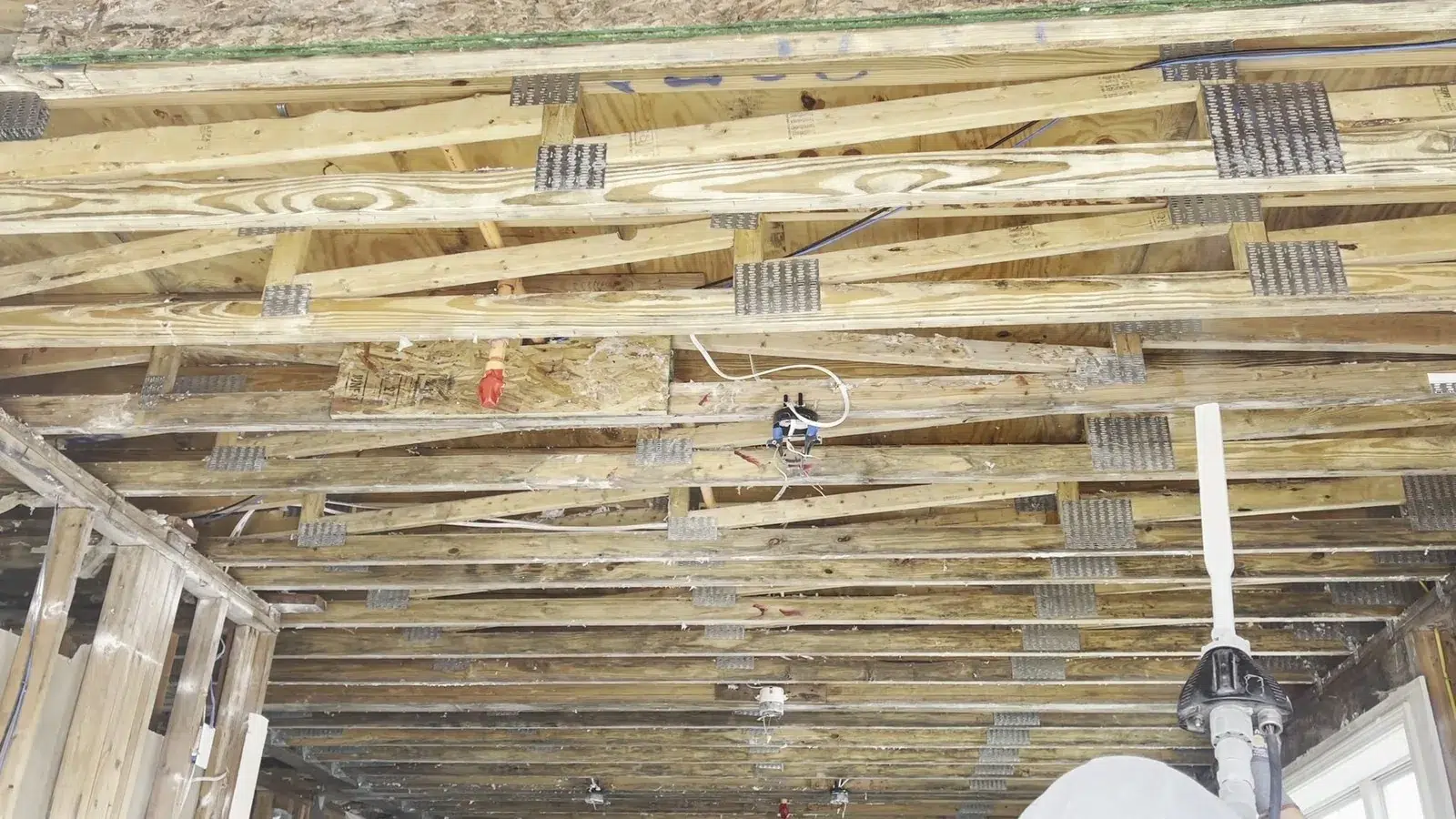
Dry ice blasting reaches overhead structures and other areas where water-based cleaning is difficult to manage.
One reason dry ice blasting works well in industrial manufacturing is its flexibility.
Food plants contain far more than stainless steel tables and conveyor belts. Production environments often include large processing systems, motors, framework, structural steel, overhead surfaces, electrical components, molds, production machinery, conveyors, and equipment with difficult geometry.
Depending on the surface and contaminant, dry ice blasting is commonly considered for areas such as production equipment, conveyors, mixers, ovens, molds, structural surfaces, walls, ceilings, framework, packaging equipment, and processing machinery.
The right cleaning process still depends on the substrate and what needs to be removed.
Blast It Clean evaluates those factors before selecting blasting parameters and developing the work plan.
WHY DOES THE LACK OF WATER MATTER?
Water is useful in food plant sanitation, but more water is not always better.
Introducing water into machinery, electrical systems, bearings, motors, overhead structures, or areas that are difficult to dry creates another factor the maintenance and sanitation teams need to manage.
Dry ice blasting is a dry process.
For industrial manufacturers, this opens up cleaning options for equipment and areas where pressure washing would be difficult or undesirable.
It also reduces the need to manage large volumes of wastewater generated by the cleaning process. That benefit becomes especially useful when a manufacturer needs targeted cleaning during a planned maintenance period and wants to limit the amount of material introduced into the production environment.
CAN DRY ICE BLASTING REDUCE PRODUCTION DOWNTIME?
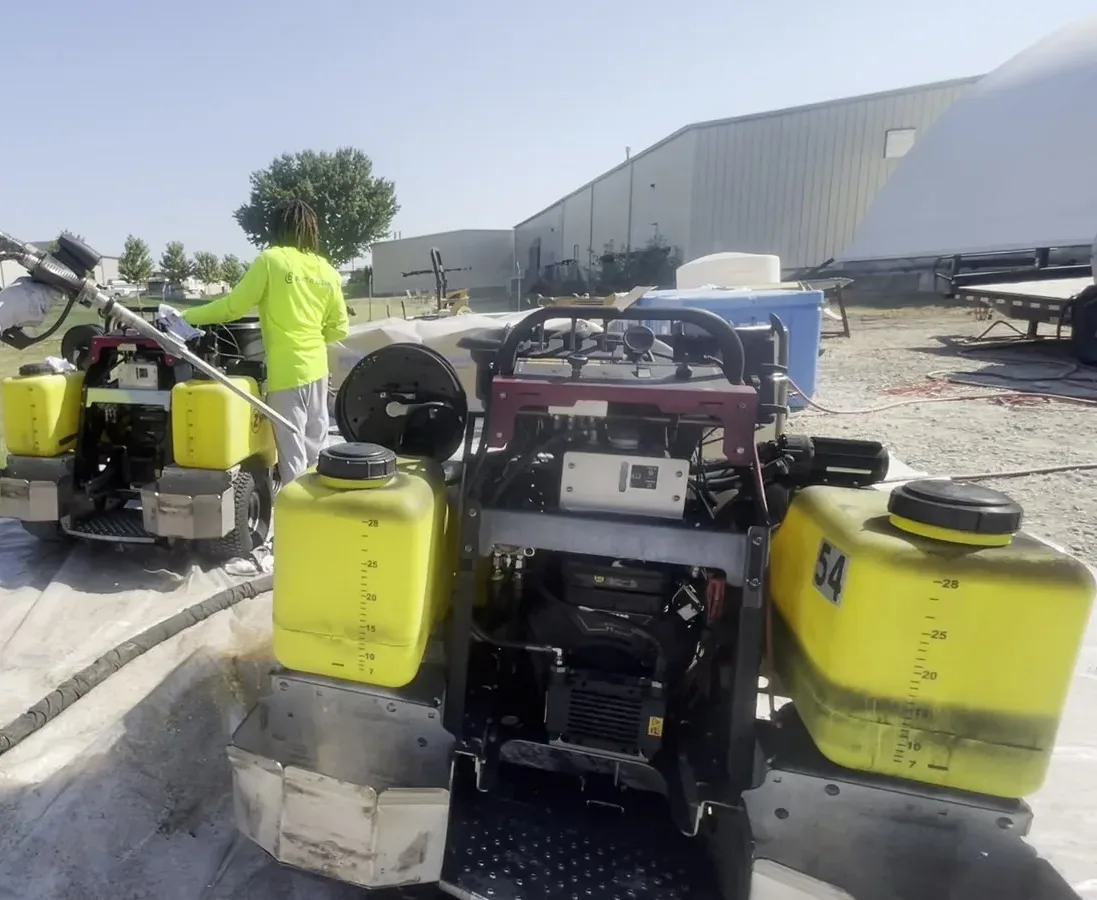
Blast It Clean plans dry ice blasting work around access, equipment, scheduling, and facility requirements.
Production schedules are often one of the biggest obstacles to deep industrial cleaning.
A food manufacturer does not have unlimited time to shut down a line, dismantle equipment, clean it, dry it, inspect it, reassemble it, and return it to production.
Blast It Clean has experience performing industrial work around active food manufacturing operations and scheduled shutdown periods. On a previous food manufacturing project, our team divided a large work area into sections, used containment and negative airflow, and completed work during dedicated weekend shutdown windows so production could resume after the work period.
Dry ice blasting fits this type of planning because it eliminates the need to clean up spent blasting media and does not introduce water from the blasting process.
The actual downtime still depends on the equipment, contaminant, size of the work area, access, containment requirements, and the manufacturer’s sanitation verification process.
This is why Blast It Clean approaches the work as an industrial project rather than a basic cleaning appointment.
WHAT ABOUT CONTAMINATION AND CONTAINMENT?
Cleaning something does not help if the cleaning process spreads debris into another production area.
Containment is especially important when work takes place near operational equipment, shared airflow, exposed product areas, or adjacent production spaces.
Blast It Clean has used containment systems and negative airflow on food manufacturing projects to isolate work areas and protect surrounding equipment from debris and overspray.
The appropriate containment setup depends on the facility and project.
Before work starts, our team looks at where the removed material will travel, what equipment needs protection, where production is occurring, how air moves through the space, and how workers will enter and exit the area.
For food manufacturers, this planning is as important as the blasting itself.
DOES DRY ICE BLASTING HELP WITH ALLERGEN CLEANING?
Dry ice blasting removes physical buildup from surfaces, which makes it useful when manufacturers need to address residues in areas where conventional cleaning is difficult.
It should not automatically be treated as a validated allergen removal process for every facility.
FDA sanitation preventive controls include preventing allergen cross-contact. If a manufacturer plans to use dry ice blasting as part of an allergen cleaning program, the facility should incorporate the process into its established procedures and verification requirements.
Blast It Clean performs the industrial cleaning work according to the agreed scope. Your quality and food safety teams determine how the cleaned area is inspected, tested, released, or incorporated into your plant’s food safety program.
That partnership keeps responsibilities clear.
WHAT SHOULD A FOOD MANUFACTURER ASK BEFORE SCHEDULING DRY ICE BLASTING?
Before choosing dry ice blasting, your team should answer a few practical questions.
What material needs to be removed? What surface is underneath it? Is the surface food-contact or non-food-contact? Is the equipment sensitive to moisture? Does the area need containment? Will nearby production continue during the work? Does your facility require post-cleaning sanitation or verification? How much downtime is available?
These questions help determine where dry ice blasting fits into the cleaning plan.
They also help Blast It Clean develop a scope around your manufacturing environment instead of applying the same process to every facility.
IS DRY ICE BLASTING BETTER THAN PRESSURE WASHING OR CHEMICAL CLEANING?
Sometimes. It depends on the job.
Dry ice blasting makes the most sense when the manufacturer wants to reduce moisture, secondary blast media, or chemical cleaning agents while removing buildup from an industrial surface.
Pressure washing remains useful for many sanitation jobs. Chemical cleaners and sanitizers also remain important parts of food plant sanitation programs.
The goal is not to replace every cleaning process with dry ice.
The goal is to use dry ice blasting when its characteristics better address the plant's problem.
For example, a manufacturer dealing with buildup around machinery and electrical components might prefer a dry process. Another plant might need to clean overhead structural surfaces without introducing large amounts of water over production equipment. A facility preparing equipment for maintenance might want to remove accumulated residue without creating secondary abrasive waste.
Those are the situations where dry ice blasting deserves a closer look.
DOES BLAST IT CLEAN’S DRY ICE BLASTING MEET FOOD-GRADE CLEANING REQUIREMENTS?
Blast It Clean’s dry ice blasting service is designed for use in industrial environments, including food and beverage manufacturing facilities, where the cleaning scope, media, containment, safety procedures, and facility requirements are established before work begins.
Food-grade compliance ultimately depends on the entire sanitation program, not the name of a cleaning process.
FDA regulations focus on sanitary conditions, clean food-contact surfaces, contamination prevention, allergen controls, and appropriate cleaning and sanitizing practices.
Dry ice blasting gives manufacturers a valuable tool for meeting those objectives because it provides dry, targeted removal of industrial buildup without leaving spent blasting media behind.
Blast It Clean provides the trained crews, blasting equipment, project planning, containment experience, and industrial cleaning knowledge needed to perform the work within the manufacturer’s established requirements.
FREQUENTLY ASKED QUESTIONS ABOUT FOOD-GRADE DRY ICE BLASTING
IS DRY ICE BLASTING FDA APPROVED?
It is more accurate to say food-grade carbon dioxide is recognized for regulated uses in food processing than to say the FDA “approves” every dry ice blasting service. A food manufacturer must still determine how a cleaning process fits its sanitation and food safety program.
DOES DRY ICE BLASTING USE CHEMICAL CLEANERS?
The blasting process uses dry ice pellets and compressed air. Additional cleaners or sanitizers might still be required by the facility’s sanitation program after blasting.
DOES DRY ICE BLASTING CREATE SECONDARY WASTE?
The dry ice sublimates into gas, so there is no spent dry ice media to collect. Material removed from the surface still requires cleanup and disposal.
CAN DRY ICE BLASTING BE USED AROUND FOOD PROCESSING EQUIPMENT?
Yes, dry ice blasting is used in food manufacturing environments. The work area, equipment, media, containment, production status, and sanitation requirements need to be evaluated before the project begins.
CAN BLAST IT CLEAN WORK DURING A PLANNED PLANT SHUTDOWN?
Yes. Blast It Clean regularly plans industrial projects around customer production schedules. Shutdown periods, weekends, phased work areas, containment, and other scheduling requirements are discussed during project planning.
DOES DRY ICE BLASTING REPLACE SANITIZING?
Not automatically. Cleaning removes unwanted material from a surface. Sanitizing addresses microorganisms to levels required by the applicable sanitation program. Your facility’s food safety plan determines the required steps after cleaning.
PARTNER WITH BLAST IT CLEAN FOR INDUSTRIAL DRY ICE BLASTING
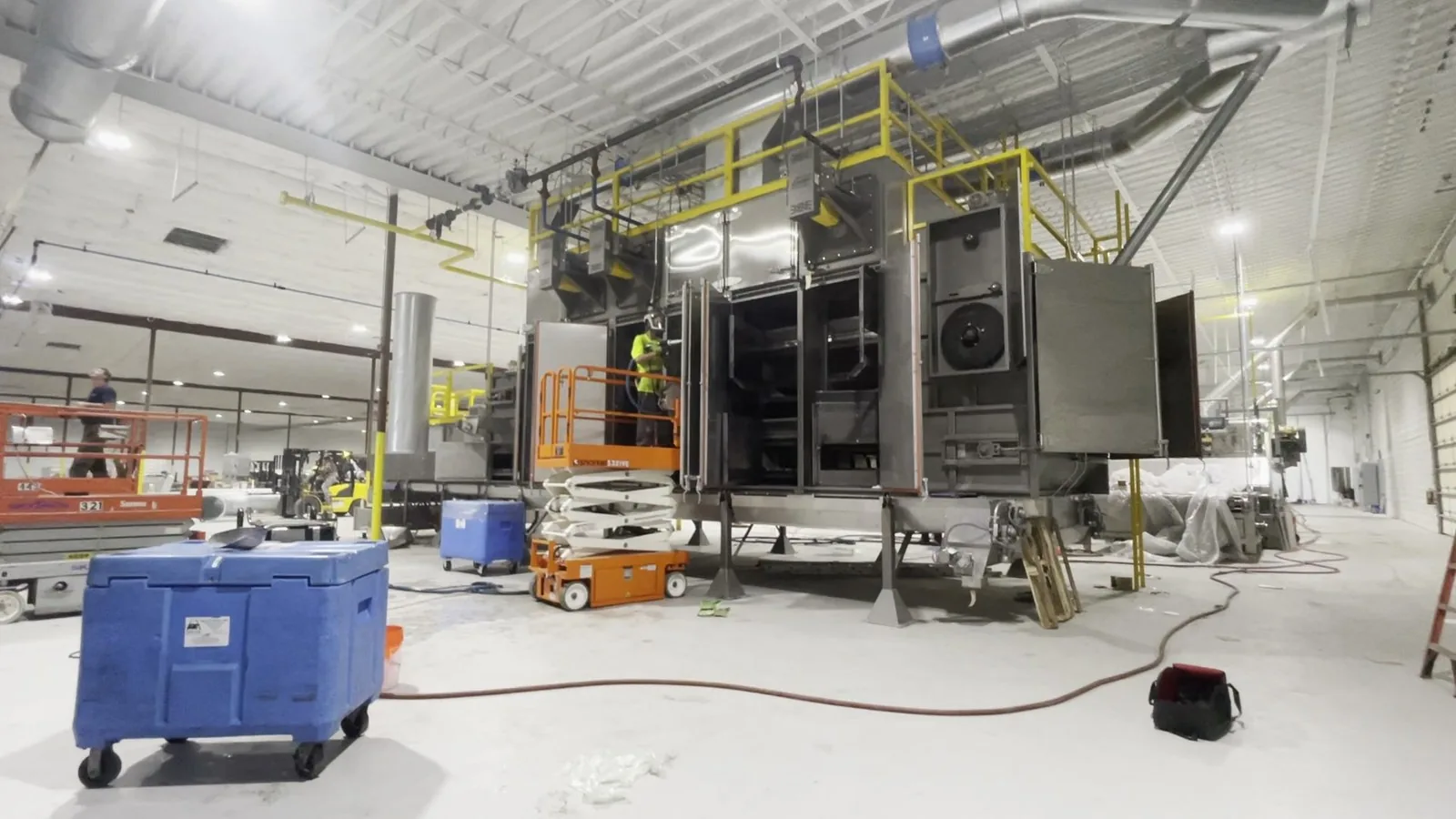
Dry ice blasting fits into larger industrial maintenance and cleaning projects involving complex production equipment.
Food manufacturers need more from an industrial cleaning contractor than someone who arrives with blasting equipment.
You need a partner who understands production schedules, containment, industrial equipment, difficult access, facility safety requirements, contamination concerns, and the consequences of delaying production.
Blast It Clean works with industrial manufacturers to build dry ice blasting projects around those realities.
Whether you need to remove buildup from production machinery, clean structural surfaces above a processing area, address difficult equipment during a shutdown, or add dry ice blasting to a larger facility maintenance project, our team works with your maintenance, sanitation, quality, and operations teams to establish the scope before work begins.
Dry ice blasting does not replace your food safety program. It gives your facility another industrial cleaning option.
If your food or beverage manufacturing facility has equipment or surfaces that are difficult to clean with water, chemicals, or traditional abrasive blasting, contact Blast It Clean to discuss whether dry ice blasting fits your next maintenance or cleaning project.