Soda Blasting for Indoor Work During Colder Months
Winter changes the way industrial maintenance gets done in Chicago. Once temperatures drop, outdoor surface prep becomes harder to schedule, certain coatings become more temperature-dependent, and opening a building up for ventilation isn't exactly appealing when it's freezing outside.
The maintenance list doesn't disappear, though.
Equipment still needs cleaning. Interior steel still needs attention. Old coatings still need to come off. Production areas still need maintenance. Facilities with work scheduled for spring often need to start surface prep months earlier to stay ahead of shutdowns and deadlines.
So, what happens when the work needs to move indoors?
This is where soda blasting often makes sense.
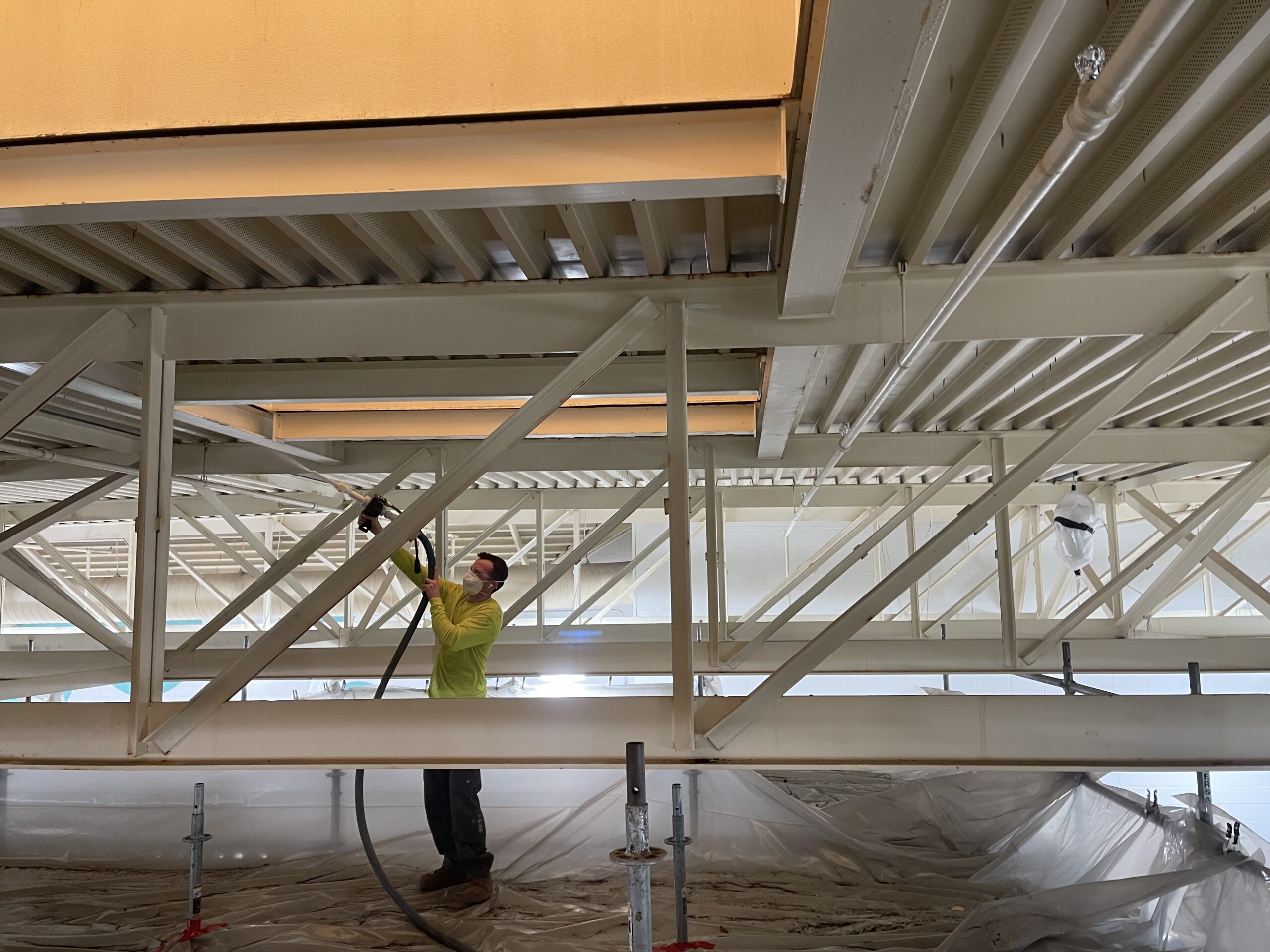
At Blast It Clean, winter brings plenty of work inside plants, warehouses, manufacturing facilities, food production environments, and other industrial spaces. Soda blasting is one of the processes we look at for indoor projects because it gives us another option when traditional abrasive blasting would be too aggressive for the surface or surrounding environment.
It isn't the right media for every surface, and we don't treat it like it is. The goal is to look at what you're removing, what you're trying to protect underneath it, and what else is happening around the work area.
WHY DOES INDOOR BLASTING REQUIRE A DIFFERENT APPROACH?
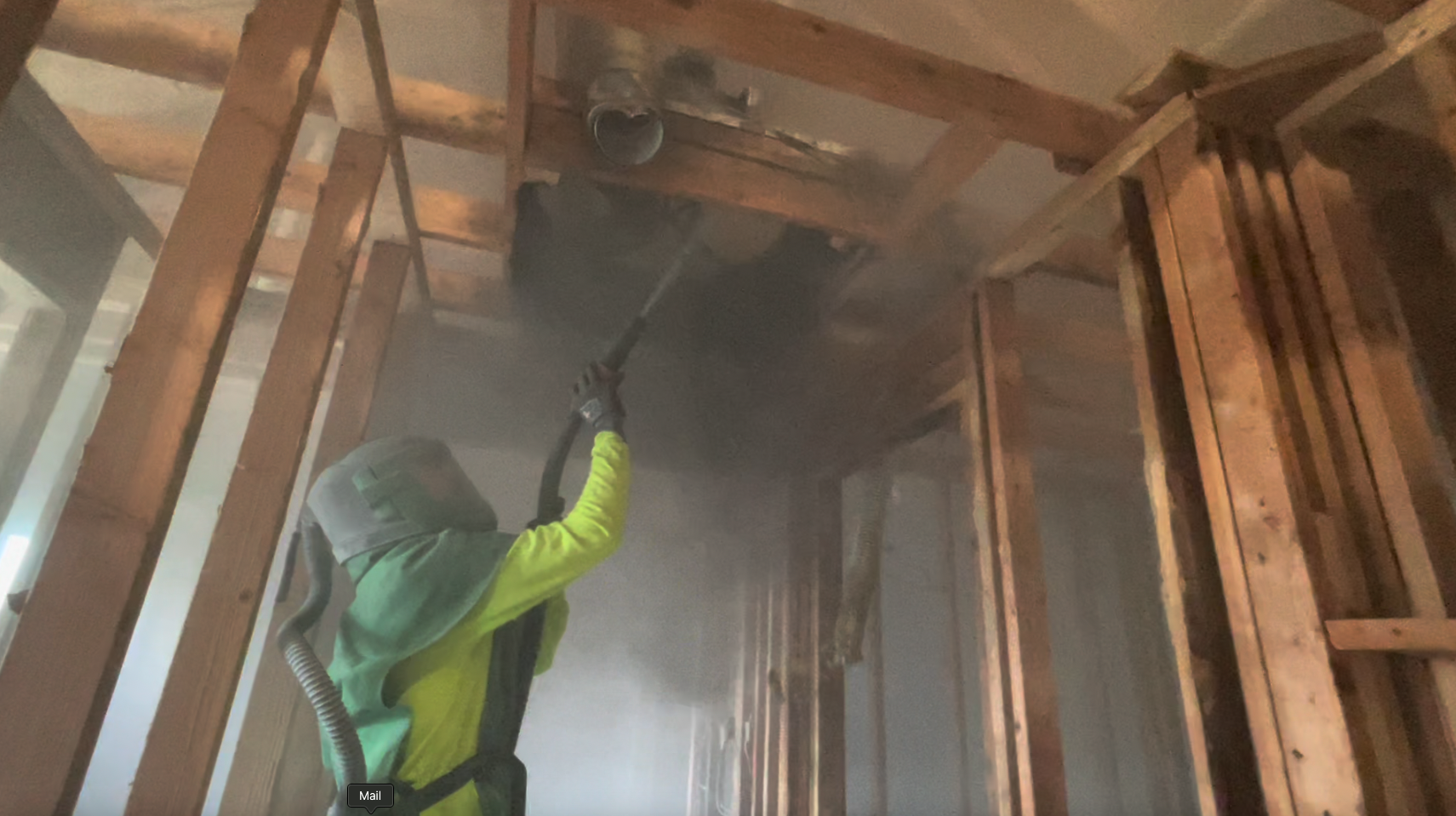
Blasting outdoors gives crews more room to work with containment, ventilation, equipment placement, and cleanup. Move the same project indoors and the conditions change quickly.
You might have production equipment a few feet away. Employees might still need access to another part of the building. HVAC systems might serve multiple rooms. Finished floors, walls, glass, electrical components, or machinery might sit close to the surface being cleaned.
Then winter adds another issue.
You don't want bay doors sitting open all day in January while your heating system tries to keep up.
For indoor blasting Chicago facilities schedule during colder months, the question isn't only, "What will remove this coating?"
We also need to ask, "What makes sense inside this building?"
Containment, ventilation, dust, media recovery, surrounding surfaces, production schedules, and cleanup all become part of the conversation.
Sometimes abrasive blasting is still the right answer. Sometimes dry ice blasting makes more sense. Sometimes pressure washing or another industrial cleaning process fits the job better.
And sometimes soda blasting lands right in the sweet spot.
WHAT MAKES SODA BLASTING DIFFERENT?
Soda blasting uses sodium bicarbonate as the blasting media. When the particles hit a surface, they break apart on impact.
That behavior makes soda blasting less aggressive than many traditional abrasive blasting processes. It is useful when the goal is to remove contaminants, soot, grease, paint, or certain coatings without creating an aggressive surface profile underneath.
For indoor work, this opens up quite a few possibilities.
Instead of treating every surface like heavy structural steel covered in rust, we have an option for projects where the substrate itself needs more consideration.
Think machinery, equipment housings, architectural components, interior steel, masonry, and spaces where multiple materials sit close together.
That's one reason soda blasting industrial interiors often comes up when we're talking with facility managers about winter maintenance.
DOES SODA BLASTING CREATE LESS DUST?
Dust is one of the first concerns we hear when someone starts considering an indoor blasting project.
And understandably so.
Nobody wants to clean one section of a facility only to discover blasting dust has traveled into another production area, settled onto equipment, or found its way toward an HVAC intake.
Soda blasting still requires containment and planning. "Low dust" does not mean "no dust."
What it gives us is another way to approach indoor cleaning without using some of the heavier, more aggressive abrasive media associated with traditional blasting.
The work area still needs to be evaluated before anything starts. We look at airflow, nearby equipment, ventilation, access points, occupied areas, and the surfaces surrounding the project.
From there, we build containment around the actual conditions inside the facility.
For a plant trying to complete maintenance without disrupting an entire building, that planning matters as much as the media itself.
WHERE DOES SODA BLASTING WORK WELL IN INDUSTRIAL FACILITIES?
One of soda blasting's biggest strengths is its versatility around surfaces where aggressive abrasion isn't wanted.
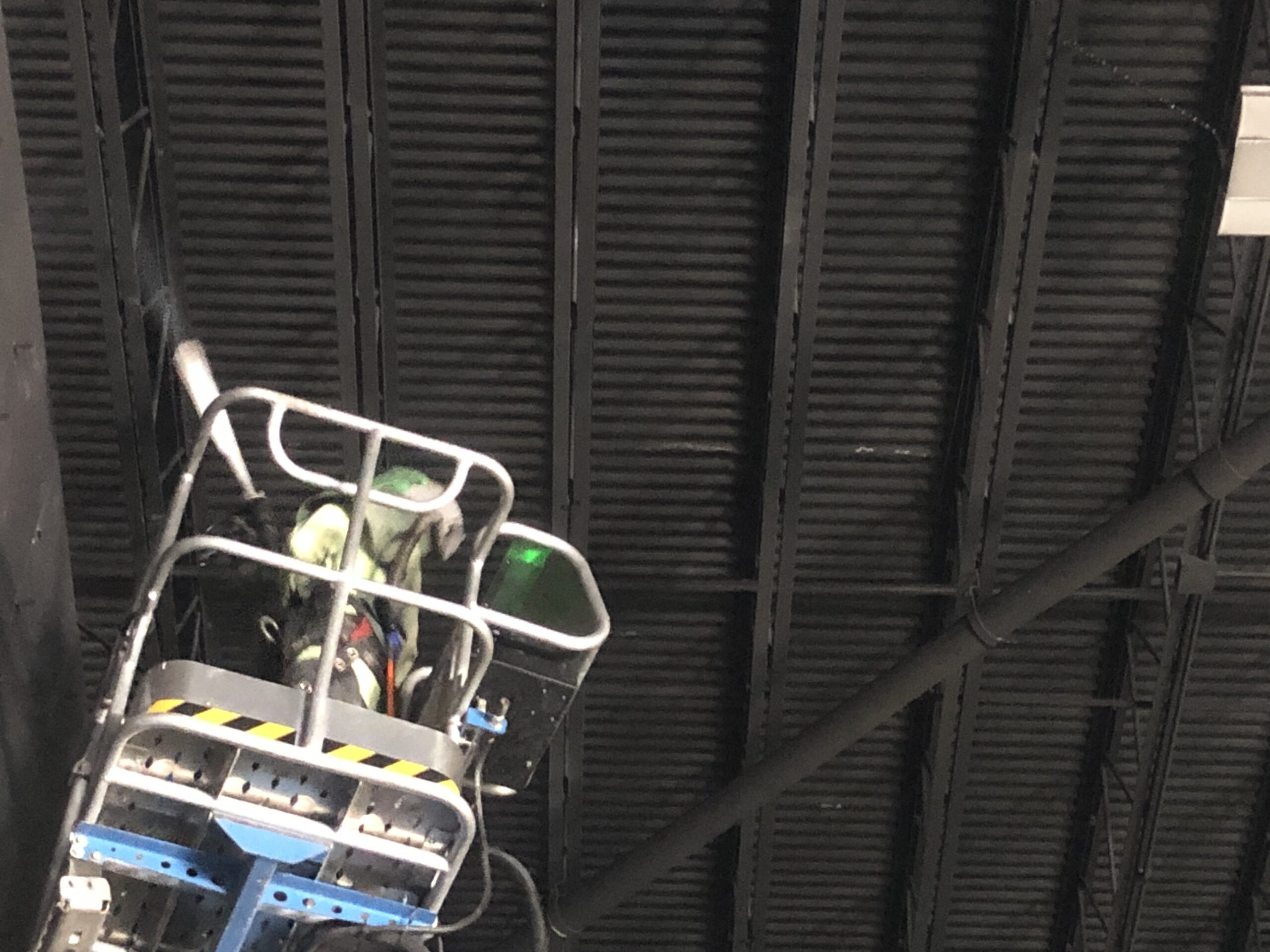
We often look at soda blasting for projects involving interior structural components, machinery, equipment housings, soot and smoke residue, grease, light coatings, and other contaminants.
It also has a place in facilities where nearby surfaces need protection.
For example, imagine you have painted equipment sitting near glass, finished flooring, aluminum components, electrical equipment, or other materials you don't want aggressively profiled.
Using the strongest abrasive available isn't necessarily better.
The right process removes what needs to come off while protecting what needs to stay.
That distinction becomes especially important inside manufacturing plants, food and beverage facilities, warehouses, commercial buildings, and mixed-use industrial spaces.
WHEN IS SODA BLASTING NOT THE RIGHT CHOICE?
Soda blasting isn't a replacement for every form of abrasive blasting.
If we're dealing with heavy corrosion, thick industrial coatings, mill scale, or steel requiring a defined surface profile before a new coating system goes on, another blasting media often makes more sense.
Soda is relatively soft. That's part of its appeal, but it also creates limitations.
If your project requires an SSPC or AMPP surface preparation standard, for example, we need to look at the coating manufacturer's requirements and the profile needed for adhesion before choosing the blasting process.
This is why we don't recommend a blasting media based solely on where the project is happening.
We need to know what you're removing, what substrate sits underneath it, what condition that substrate is in, and what happens to the surface after cleaning.
If you're recoating it, the coating system matters too.
Sometimes soda is the answer. Sometimes it isn't.
We'd rather figure that out before equipment arrives than try to force the wrong process onto the job.
WHY DOES SODA BLASTING MAKE SENSE DURING A CHICAGO WINTER?

Winter blasting in Chicago comes with a pretty obvious problem. It's cold.
Facilities need to maintain indoor temperatures, protect equipment from temperature swings, keep production moving, and avoid creating unnecessary openings to the outside.
Moving maintenance indoors also means airflow becomes more restricted than it would be during warmer weather.
Soda blasting fits into this environment because it gives facilities another option for surface cleaning and coating removal when aggressive abrasive blasting isn't needed.
There's also a scheduling advantage to tackling suitable interior projects during colder months.
Instead of pushing every maintenance project into spring and summer, facilities can use winter shutdowns, slower production periods, planned maintenance windows, or off-hours work to address interior surfaces.
That helps spread maintenance across the year rather than creating a backlog once warm weather returns.
For facilities with a lot of exterior work planned for spring, winter is also a good time to get interior projects off the list.
WILL YOUR FACILITY HAVE TO SHUT DOWN?
Not necessarily.
This depends heavily on the facility, the work area, and what's happening around it.
Some projects need a dedicated shutdown window. Others allow us to isolate the work area while operations continue elsewhere.
This is where planning becomes important.
Before work begins, we want to understand your production schedule, employee traffic, nearby equipment, ventilation, access requirements, safety restrictions, and any deadlines connected to the project.
If work needs to happen overnight, during a weekend, during a planned shutdown, or around production, we want to know that before mobilization.
Blast It Clean offers flexible scheduling and 24-hour emergency services because industrial work doesn't always fit neatly between 8 a.m. and 5 p.m.
The blasting process needs to fit the facility, not the other way around.
WHAT DOES AN INDOOR SODA BLASTING PROJECT LOOK LIKE?
Every facility is different, but the conversation usually starts with the same questions.
- What are we removing?
- What is the substrate?
- How much surface area are we dealing with?
- What's nearby?
- Does the surface need to be recoated afterward?
- What happens in this part of the facility during normal operations?
Those answers help us determine whether soda blasting makes sense and what containment, access, equipment, and scheduling the project requires.
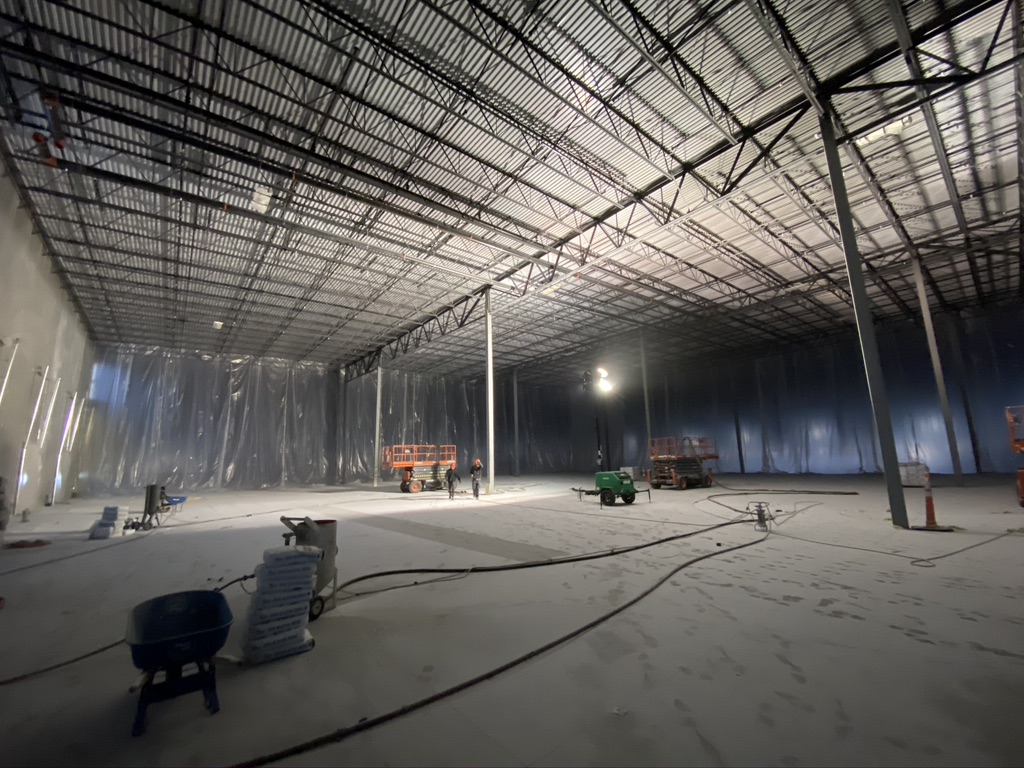
For example, a manufacturer might need interior steel cleaned before repainting but still have production happening elsewhere in the building.
A food processing facility might need equipment cleaned while placing more emphasis on containment and surrounding production areas.
A warehouse might have old coatings or residue on interior surfaces but need portions of the building to remain accessible throughout the project.
Those are different jobs, even if all three involve soda blasting.
The process starts with understanding the facility rather than treating every indoor project the same.
WHAT HAPPENS IF THE SURFACE NEEDS PAINT OR COATINGS AFTERWARD?
This is where having blasting and coating services through the same company helps simplify the project.
Surface preparation and coatings have to work together.
There's little value in getting a surface clean if the preparation doesn't meet the requirements of the coating going over it.
Blast It Clean handles abrasive blasting, industrial cleaning, painting, and protective coatings, so our team looks at the entire process when a project involves more than cleaning alone.
If soda blasting isn't appropriate for the coating system you're planning to use, we'll look at another surface prep option.
If it does fit the project, we plan the cleaning around what needs to happen next.
That keeps the project moving without asking the facility manager to coordinate several companies working on different pieces of the same surface.
COULD WINTER BE THE RIGHT TIME TO HANDLE YOUR INDOOR MAINTENANCE?
If you've been putting off an interior cleaning or surface prep project because warmer months are packed with exterior work, winter might give you the opening you've been waiting for.
You don't have to wait until spring to address every piece of steel, equipment, machinery, or interior surface on your maintenance list.
Soda blasting gives Chicago facilities another option for indoor work where a less aggressive blasting process makes sense.
More importantly, you don't need to figure out the blasting media before you call us.
Tell us what you're trying to clean, remove, restore, or recoat. Tell us what's happening around the work area and what your maintenance schedule looks like.
We'll start there.
HOW CAN BLAST IT CLEAN HELP?
Blast It Clean provides mobile soda blasting, abrasive blasting, industrial cleaning, painting, and protective coating services for industrial and commercial facilities.
Our team works around production schedules, shutdown windows, facility restrictions, and the realities of working inside active buildings. If soda blasting fits your project, we'll build the work around your space and schedule. If another surface prep process makes more sense, we'll explain why and help you look at the available options.
If you have interior steel, machinery, equipment, or other surfaces that need attention this winter, reach out to Blast It Clean and tell us what's on your maintenance list.
We'll help you figure out what makes sense to tackle now, what process fits the surface, and what needs to happen next.